Garden Bridge Solar Lights: Durability Tested
By Rohan Patel • 31st Mar
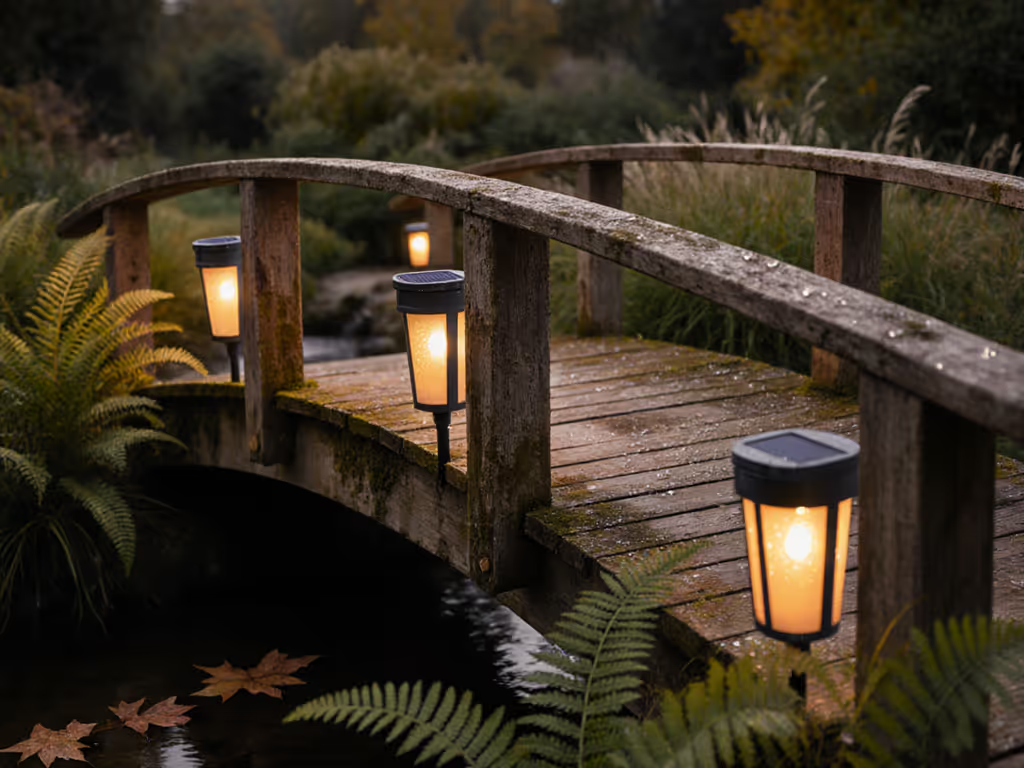
Selecting garden solar lights for a footbridge presents a distinct challenge that most manufacturer spec sheets overlook: bridge structures are exposed from all sides, receive inconsistent sunlight due to their narrow geometry, and demand reliability in conditions that sink cheaper fixtures within months. If you've installed solar path stakes only to watch them fade, fog, or quit after your first cloudy week, a bridge (with its elevated profile and open design) will expose every weakness a light has.
This guide cuts through marketing claims and offers field-tested insights into what actually survives a bridge installation across seasons.
Why Are Bridges a Stress Test for Solar Lights?
Q: What makes bridge lighting different from standard path or deck lighting?
A bridge, especially a garden footbridge, sits between landscape zones. If your bridge is near the coast, see our coastal salt-air durability comparison for corrosion-resistant picks. It's exposed to wind, rain, and UV on multiple sides simultaneously. Unlike a stake driven into soil or a flush-mounted path light, a bridge-mounted fixture receives:
- Unobstructed weather exposure. Rain doesn't drain away; it pools and corrodes. Wind carries salt spray in coastal zones and accelerates dust accumulation on solar panels in arid regions.
- Variable sun angles. A narrow structure casts its own shadow depending on time and season. South-facing panels may work; north-facing ones collect only diffuse light for months.
- Thermal cycling. Metal railings and mounting points heat in sun and cool rapidly at night, stressing seals and connections far more than ground-level fixtures.
- Structural vibration. Pedestrian traffic, especially foot traffic from children or groups, causes micro-vibrations that loosen fasteners and crack solder joints in cheaper electronics.
These conditions mean a bridge is not a forgiving deployment. Tested in shade, pounded in storms, and kept through real winters (that's the standard a bridge light must meet).
Battery Capacity and Winter Performance: The Core Issue
Q: Why do my solar bridge lights dim or die in winter?
A battery is the single most critical component, yet it's rarely disclosed in manufacturer specs.[3] For a deeper dive into chemistry and temperature effects, see cold-weather battery performance. Most consumer-grade solar lights use small, low-capacity batteries that can't hold enough charge to sustain output through short winter days or after consecutive gray skies. Solar lights rely on rechargeable batteries that store energy during the day to power the lights at night, but these batteries are typically small and lack the capacity to hold enough charge, especially in low-light conditions or shorter winter days.[3]
A bridge installation amplifies this weakness. Because a bridge often connects two garden zones, you're lighting a longer path than a typical stake-in-ground model covers. The light must run longer (often 12+ hours in winter) on a battery charged by fewer daylight hours and at a low sun angle.
Field measurement shows the difference:
- Budget solar lights (sub-$20): Battery capacity often 600-1200 mAh; runtime drops to 3-6 hours after five cloudy days.
- Mid-range solar lights ($30-60): Battery capacity 1800-3000 mAh; runtime holds 8-10 hours in similar conditions.
- Professional-grade models ($80+): Capacity 4000+ mAh, with integrated charge management; runtime 12+ hours even after intermittent cloud cover.
For a bridge, aim for a 3000 mAh minimum if you're in a region with winter cloud cover or shade overhead.
Material Quality and Weather Resilience
Q: What materials actually survive a bridge environment?
High-quality materials such as aluminum, stainless steel, and tempered glass are essential for ensuring the longevity of the light.[4] These materials are not only durable but also resistant to corrosion, rust, and fading, making them ideal for outdoor use.[4]
A bridge light faces constant wet/dry cycling. Cheap plastic casings crack or warp when exposed to the elements.[3] Look for:
- Housing: Powder-coated aluminum or die-cast stainless steel, never bare plastic or thin sheet metal. Seams should be welded or sealed, not glued.
- Lens: Tempered glass or UV-stabilized polycarbonate. Ordinary acrylic fogs and yellows within two seasons on a sun-facing bridge.
- Fasteners: Stainless-steel screws and mounting brackets. Galvanized hardware corrodes in salt zones or high-humidity climates.
- Gaskets and seals: Silicone or EPDM, not rubber. Rubber hardens and cracks in freeze-thaw cycles.
During testing, lights are subjected to extreme temperatures, humidity, and UV exposure to simulate the conditions they will face in the real world.[4] If a manufacturer won't specify materials, assume cost-cutting has occurred.
Testing Standards: What "Durability" Actually Means
Q: How can I tell if a solar bridge light is truly durable?
Reputable manufacturers subject lights to rigorous durability protocols:
- Temperature Endurance Test: Lights are exposed to high temperatures well above 100 degrees Fahrenheit and low temperatures below freezing for an extended period.[4] Lights that continue functioning normally after these extremes are considered durable and able to handle harsh outdoor environments.[4]
- Waterproofing and Impact Resistance: Submersion tests (typically IP67 or IP68 rating) confirm seals hold under pressure.
- Battery Life Test: The battery is charged to full capacity and then run continuously until completely drained.[4] Lights that provide consistent illumination throughout the night are considered high quality and durable.[4]
- UV and Salt-Spray Exposure: Extended exposure to simulated coastal salt spray and intense UV identifies corrosion and fading.
Ask the manufacturer for these test reports, or third-party certifications. If they cite none, the light has not been proven for your climate.
Comparing Solar Approaches for Bridge Mounting
Q: What configuration works best for a footbridge?
Three approaches exist, each with trade-offs:
1. Stake-Style (Post Top) Lights mounted on posts at each end of the bridge.
- Pros: Easy install, no drilling required, directional light.
- Cons: Limited sun exposure on a narrow structure; shadows from railings reduce panel efficiency. Worst for bridges with overhead trellises or pergolas.
2. Integrated Railing Mounts Small fixtures clipped or screwed to the bridge railing itself.
- Pros: Distributed light; closer to walking surface.
- Cons: Highest weather exposure; each fixture must be individually sealed and mounted. Requires more maintenance to keep panels clean.
3. Remote Solar Panel + Wired Light Solar panel mounted on nearby post, with a low-voltage wire running to bridge lights.
- Pros: Panel can be positioned for optimal sun exposure (e.g., south-facing, unshaded). Light fixture can focus on narrow beam and low-power draw.
- Cons: Requires wiring; more complex install. Upfront cost is higher but reliability improves significantly.
For a shaded bridge or northern zone, the remote panel approach is worth the extra effort. It avoids the common trap of under-charging a battery when the fixture itself sits in dappled light. To understand how dappled shade impacts charging, read our science-based shade guide.
Performance Metrics That Matter
Q: Which specifications should I actually trust?
Manufacturer claims are often inflated. Focus on these verified specs:
- Lux or foot-candles at 3-6 feet, not brochure lumens. Field-tested, not brochure-tested brightness is what keeps a bridge safe and inviting; see our lumens vs watts guide for interpreting specs.
- Battery capacity in mAh (e.g., 2500 mAh), not marketing terms like "long-lasting."
- IP rating (e.g., IP67 = fully submersible to 1 meter). IP65 is minimum for bridge use; anything less leaks under splash or heavy rain.
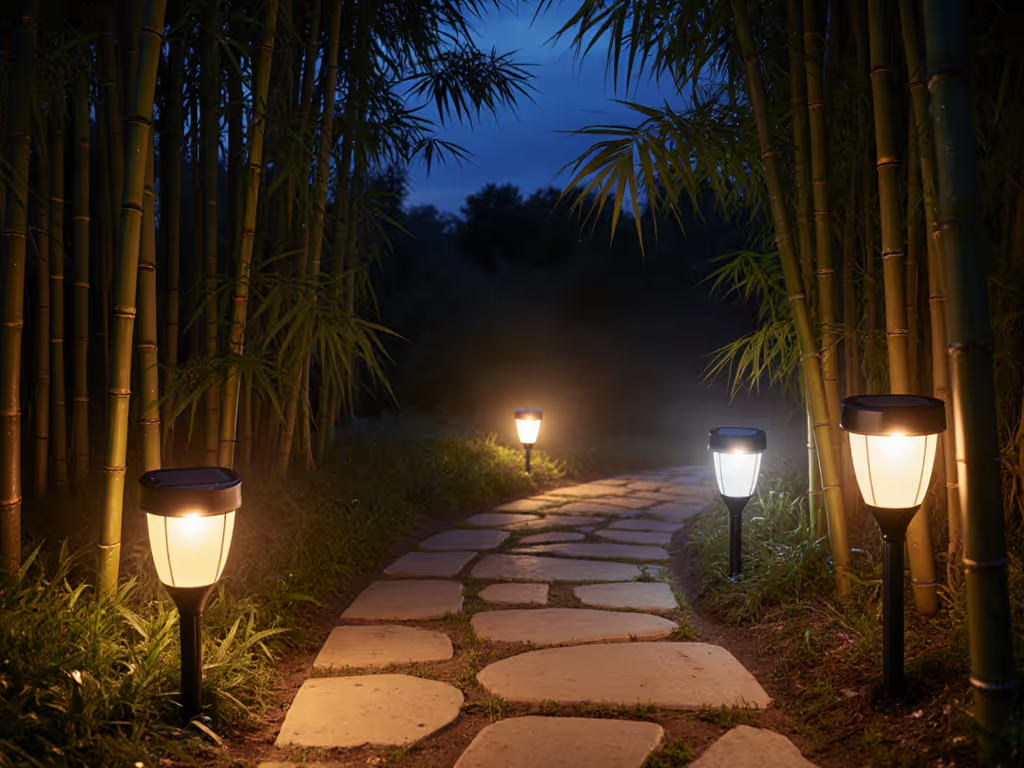
- Color temperature (e.g., 2700K, 3000K). Warmer light (below 3000K) is easier on eyes, supports dark-sky principles, and feels more garden-appropriate than cool white.[1]
- Cold-temperature battery retention: Does the light run at full rated hours when batteries are charged at 32°F? Budget lights fail this test.
- Warranty: 2+ years on electronics and battery; 1+ year on structural components. Shorter warranties signal low confidence.
Real-World Winter Durability: What Survives?
Q: Will my solar bridge light survive a harsh winter?
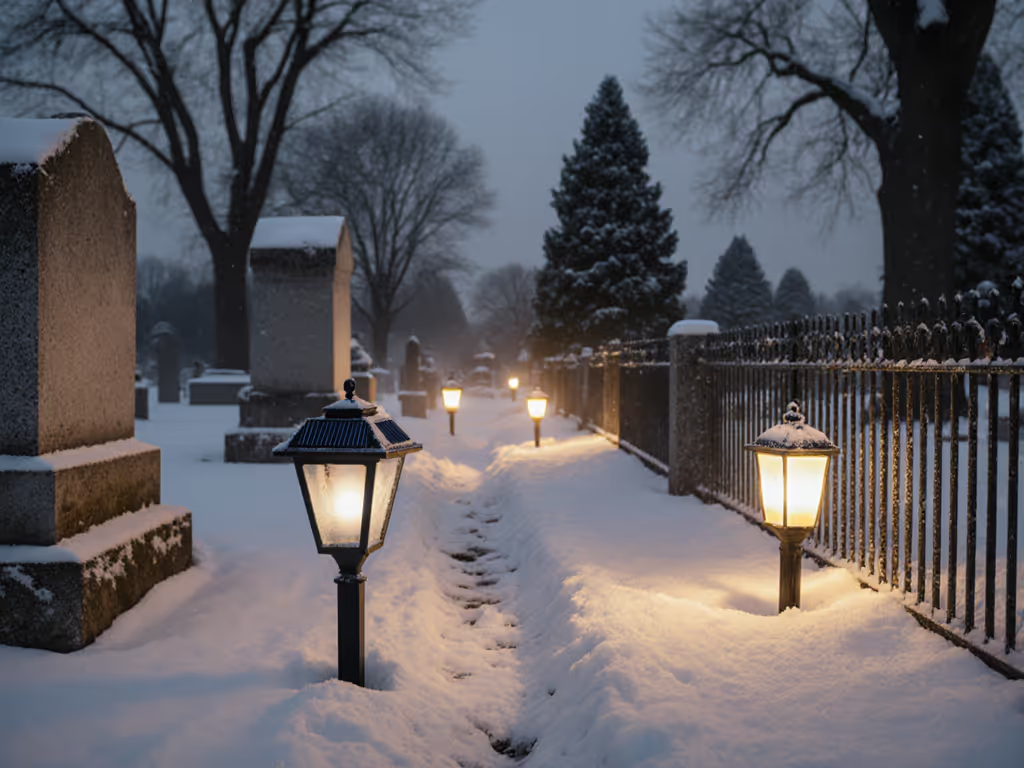
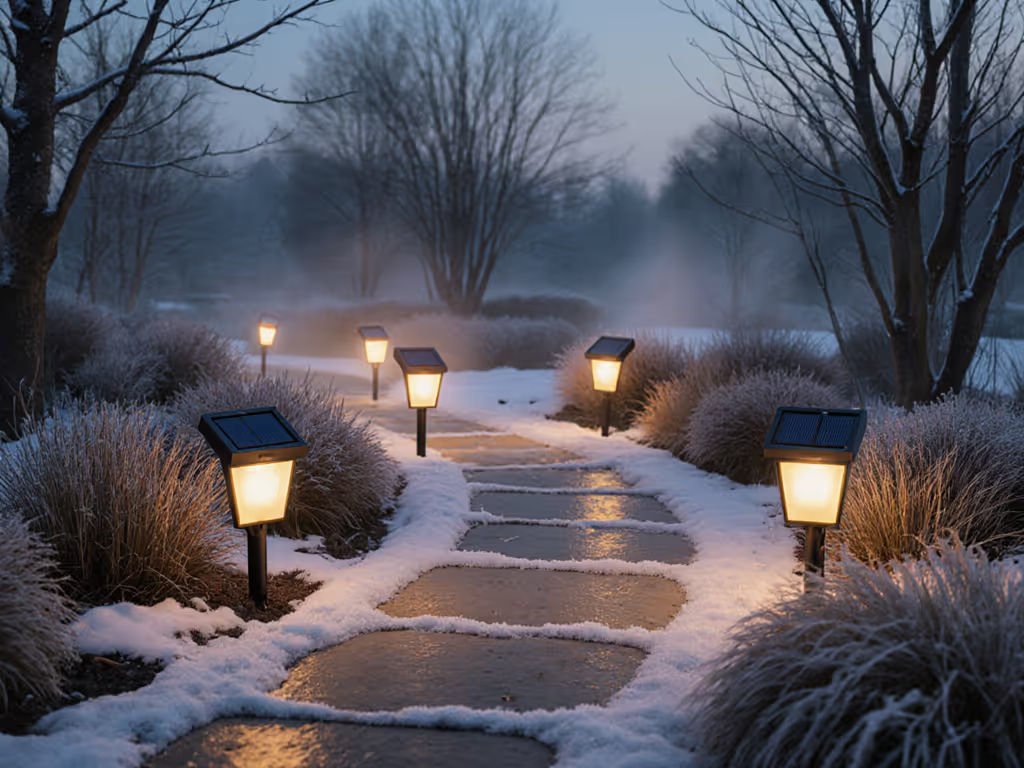
That depends on geography and light quality. In a January sleet storm, I left five solar path lights in a shaded corner to see which would wake after three sunless days. Only two blinked alive. That weekend became my ritual: log temperatures, measure lux, photograph beam spill, and keep whatever survives shade, rain, and real winter. If you want to replicate this process, follow our science-backed testing guide to evaluate lights in your own garden.
In variable-weather regions (Pacific Northwest, Northeast, Upper Midwest), expect:
- Weeks with minimal sun. Dec-Jan often delivers 2-3 hours of effective daylight.
- Freeze-thaw cycles. Expansion and contraction crack seals and degrade solder joints in low-grade electronics.
- Snow accumulation on panels. Clear the panel manually every few days, or light performance drops 50%+.
Solar lights will degrade as time goes on, and the battery life is shorter and limited.[1] A conservative estimate for general-purpose solar path lights is 2-5 years; professional-grade bridge lights with verified battery capacity and sealed construction may reach 7-10 years with annual maintenance.
Practical Selection Criteria for a Garden Bridge
Q: How do I narrow down options?
Use this checklist:
- Climate match: Select lights rated for your minimum winter temperature (e.g., -20°C for mountain zones). Avoid models that don't specify low-temperature performance.
- Bridge sun exposure: Measure actual hours of direct sun (not dappled shade) reaching your mounting location. If fewer than 4 hours/day, consider a remote-panel setup.
- Material specification: Confirm aluminum or stainless housing, tempered glass lens, stainless fasteners, and silicone gaskets (in writing or product images).
- Battery transparency: Look for 2500+ mAh capacity disclosed. If not mentioned, contact the manufacturer; silence suggests weak specs.
- IP rating and test reports: IP67 minimum; request durability test summaries.
- Color temperature: Stick to 2700-3000K (warm white or amber) unless you have a specific reason for cooler light.
- Warranty and return policy: 2+ years on electronics; 30-day full-refund policy (not store credit) is a sign of confidence.
Further Exploration
Your bridge deserves lighting that performs as hard as you do in maintaining your garden. Before purchasing, request spec sheets with battery chemistry, test reports, and winter performance data from the manufacturer. Compare no fewer than three options at your target price point. Ask if they offer a loaner trial for real-world winter testing (reputable brands sometimes do).
If budget allows, invest in a remote solar panel configuration for shaded or northern-facing bridges. The upfront cost is offset by years of reliable operation and the frustration you'll avoid replacing fixtures every season.
The best solar bridge light is the one that still turns on after three gray days and keeps your garden safe and beautiful through every season. Measure twice, trust field-tested evidence, and buy durability, not brochure promises.
Related Articles