Dappled Light Solar Charging: Science-Based Shade Solutions
By Hana Takahashi • 16th Jan
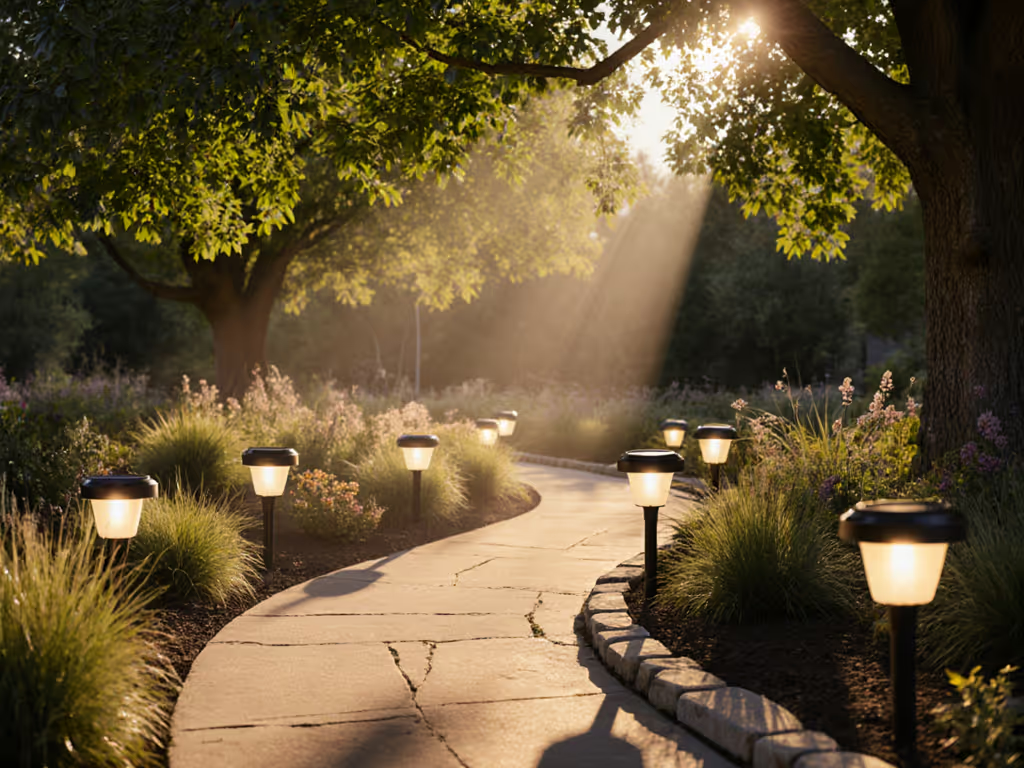
Solar lighting provides elegant illumination for gardens, but homeowners frequently struggle with partial shade solar charging and understanding realistic dappled light performance. For those managing tree-lined paths, north-facing borders, or gardens beneath mature canopies, finding reliable lighting solutions requires understanding how solar technology interacts with complex light conditions. This guide translates photovoltaic science into practical strategies for creating gardens that remain both functional and ecologically responsible after dark.
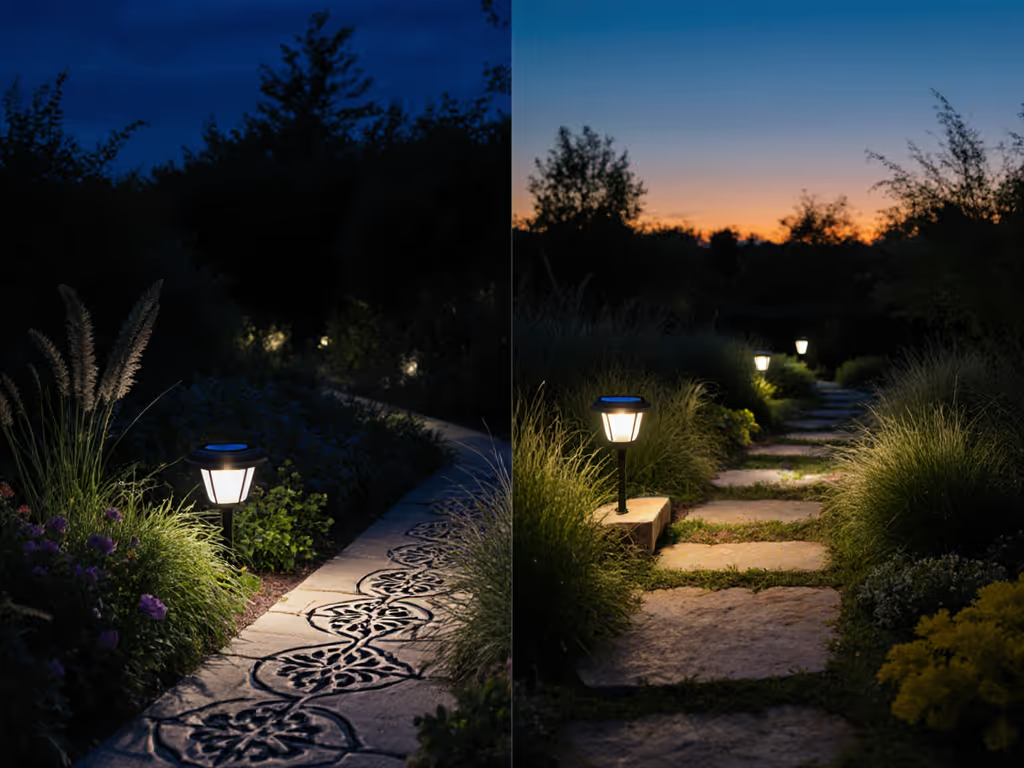
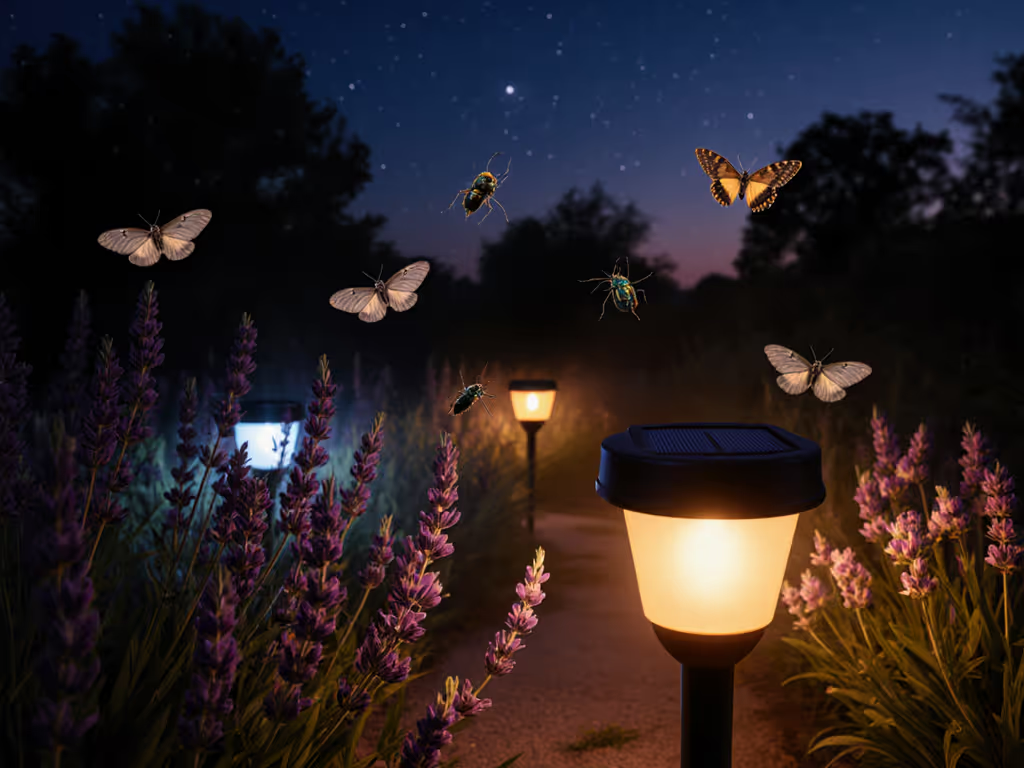
Warm, shielded, and timed: light that wildlife can live with.
What Exactly Is Partial Shade Solar Charging?
Partial shade occurs when solar panels receive intermittent sunlight due to obstructions like tree branches, fences, or building overhangs. Unlike full shade (where minimal light reaches the panel), partial shade creates fluctuating light conditions that affect charging differently than commonly assumed. Solar panels don't simply "turn off" when partially shaded, they experience graduated efficiency losses that depend on both the coverage percentage and positioning of the shadow.
Photovoltaic cells operate through the photoelectric effect, where photons excite electrons to create electrical current. When 10% of a panel's surface is shaded, studies confirm power output drops by about 2.3%. However, when 44% of a panel becomes shaded, power output loss can escalate to 80%, demonstrating that partial shade doesn't cause linear degradation, it creates disproportionate impacts due to how solar cells are interconnected. This phenomenon explains why even minor shadows from nearby vegetation can dramatically reduce performance.
How Does Dappled Light Performance Compare to Direct Sunlight?
Dappled light (sunlight filtered through tree canopies) creates unique charging conditions. Research indicates these environments provide 25-45% of the charging efficiency achievable in full sun, depending on canopy density and panel technology. The critical difference lies in light spectrum and continuity: direct sunlight delivers concentrated photons across the visible spectrum, while filtered light through foliage primarily transmits longer wavelengths (reds and yellows) while scattering shorter blue wavelengths.
This spectral filtering has two consequences for solar garden lighting: reduced total energy capture and altered charging patterns. Panels in dappled light experience intermittent bursts of energy rather than continuous input, which affects battery management systems differently than steady charging. Understanding these solar panel efficiency metrics helps set realistic expectations for run times in shaded garden areas.
What Practical Impact Do Garden Shade Patterns Have?
Garden shade patterns shift throughout the day and across seasons, creating dynamic charging conditions. A location receiving morning sun beneath deciduous trees may perform well in spring but become heavily shaded in summer when foliage matures. This seasonal variation explains why many homeowners report inconsistent performance from season to season.
Monitoring your garden's light patterns for a week reveals valuable insights about intermittent sun exposure. During peak solar hours (10 AM-2 PM), even areas with deep afternoon shade often receive critical charging light. Positioning solar fixtures to maximize exposure during these peak hours significantly improves performance. This approach aligns with dark-sky principles. By optimizing placement for minimal necessary illumination, we create lighting that supports both human needs and ecological balance.
How Can I Assess Real-World Performance in My Specific Conditions?
Field studies of solar lighting in residential settings provide practical metrics for shaded environments. In partially shaded conditions (3-4 hours of direct sun plus dappled light), high-efficiency panels typically achieve 40-60% of their rated capacity. This translates to approximately 4-6 hours of illumination at reduced brightness rather than the advertised 8-10 hours. To measure your garden's actual performance, follow our science-backed testing guide.
When evaluating products, look for transparent specifications that differentiate between ideal and real-world performance. Reputable manufacturers provide both "full sun" and "partial shade" performance metrics. For tree canopy lighting effects, expect approximately 30% efficiency compared to open-sky installations, a finding confirmed by multiple university extension studies on residential solar lighting.
What Placement Strategies Work Best for Intermittent Sun Exposure?
Strategic placement transforms problematic shaded areas into functional lighting zones. Consider these evidence-based approaches: If your site remains heavily canopy-covered, see our best solar lights for shady gardens that actually work.
- Remote panel systems: Position the solar panel in a sunnier location while the light fixture remains in shade
- Adjustable mounting: Use fixtures with tiltable panels that can be oriented toward the strongest available light
- Seasonal repositioning: Move stake lights as seasonal shade patterns change
- Reflective surfaces: Strategically place light-colored stones or walls to bounce additional light onto panels
I once documented bat activity near a community garden where warm, shielded path lights functioned reliably despite surrounding trees, while cool-white fixtures nearby failed after sunset. The difference wasn't brightness, it was thoughtful placement that respected both human safety needs and ecological rhythms.
Why Is Warm Light More Compatible with Shade-Adapted Solutions?
This brings us to a crucial ecological consideration: warm-spectrum lighting (2700K-3000K) performs better in shaded environments for both technical and biological reasons. Technically, warm-white LEDs consume less energy than cool-white alternatives, extending battery life when charging is limited. Biologically, warmer light minimizes disruption to nocturnal wildlife.
Research confirms that blue-rich light (above 3000K) disproportionately attracts insects and disrupts circadian rhythms in both wildlife and humans. In shaded gardens already challenged by reduced charging capacity, selecting warm-spectrum fixtures represents a dual optimization: improved energy efficiency and ecological responsibility. This approach embodies the principle that night belongs to more than humans; light should tread lightly.
What Maintenance Practices Improve Partial Shade Performance?
Regular maintenance significantly improves performance in challenging light conditions:
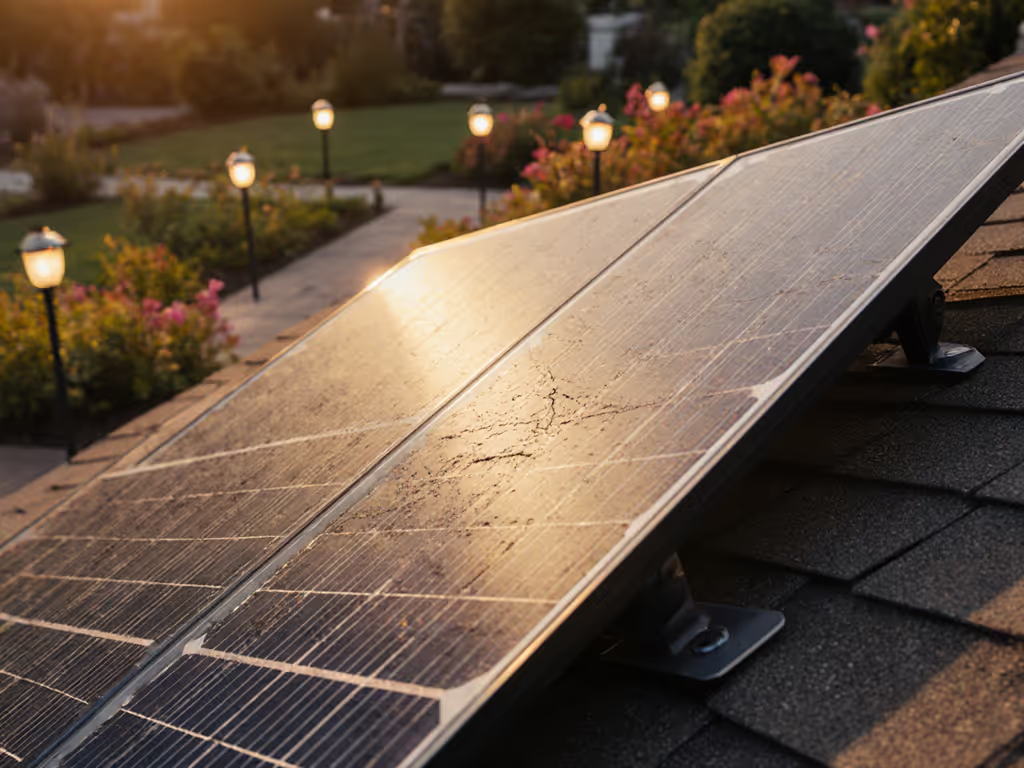
- Panel cleaning: Dirt accumulation reduces efficiency by 15-25%; clean panels monthly in dusty environments
- Seasonal adjustment: Reposition fixtures as sun angles change throughout the year
- Battery management: Replace lithium-ion batteries every 2-3 years (before significant capacity loss)
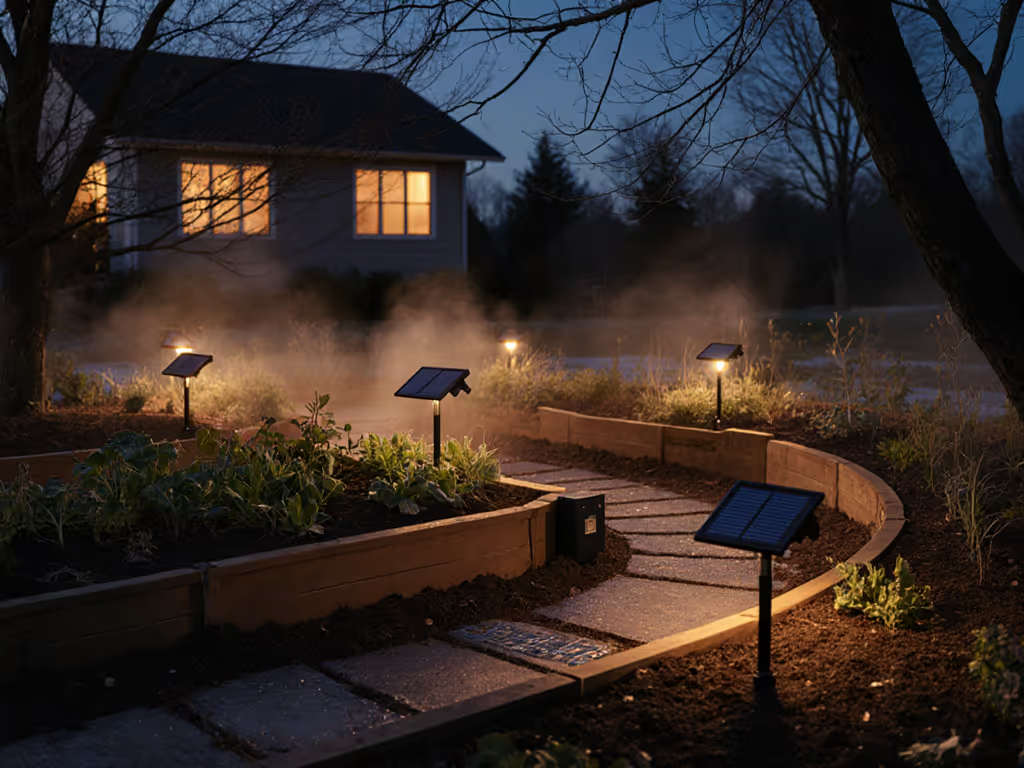
- Winter preparation: Clear snow from panels and consider removable stakes for extremely cold regions
These practices ensure your lighting system operates at maximum efficiency within the constraints of your garden's natural light patterns.
How Does This Approach Support Both Human and Ecological Needs?
Understanding partial shade solar charging transforms how we design night gardens. By working with natural light patterns rather than against them, we create spaces that provide safe, beautiful illumination while respecting the complex web of nocturnal life. Strategically placed warm-spectrum lighting prevents the insect swarms that plague bright, cool-white alternatives, preserving both stargazing enjoyment and ecological balance.
This integrated approach delivers what conscientious gardeners seek: reliable illumination that enhances safety without creating light pollution, functions across seasons without excessive maintenance, and honors the garden's role as habitat as well as sanctuary.
Protect the night to enjoy the full richness of your garden after dark, a place where human comfort and ecological integrity coexist harmoniously. For deeper understanding of species-specific light impacts, the International Dark-Sky Association's Habitat Guidelines provide scientifically vetted recommendations for garden lighting that supports biodiversity while meeting human needs.
Related Articles