Solar Panel Degradation: UV, Heat & Voltage Impact
By Rohan Patel • 19th Mar
Solar panel degradation and long-term performance metrics determine whether your garden lights survive winter or fade by November. I've logged enough gray days and freeze-thaw cycles to know: specifications on a box don't match what happens outdoors. Here's what the data actually says.
What Causes Solar Panels to Degrade Over Time?
Solar panels lose power gradually and sometimes suddenly (the result of normal wear from exposure to light and weather, plus less common chemical and electrical faults). Degradation is so predictable that manufacturers include it in every performance warranty terms, stepping down over decades.
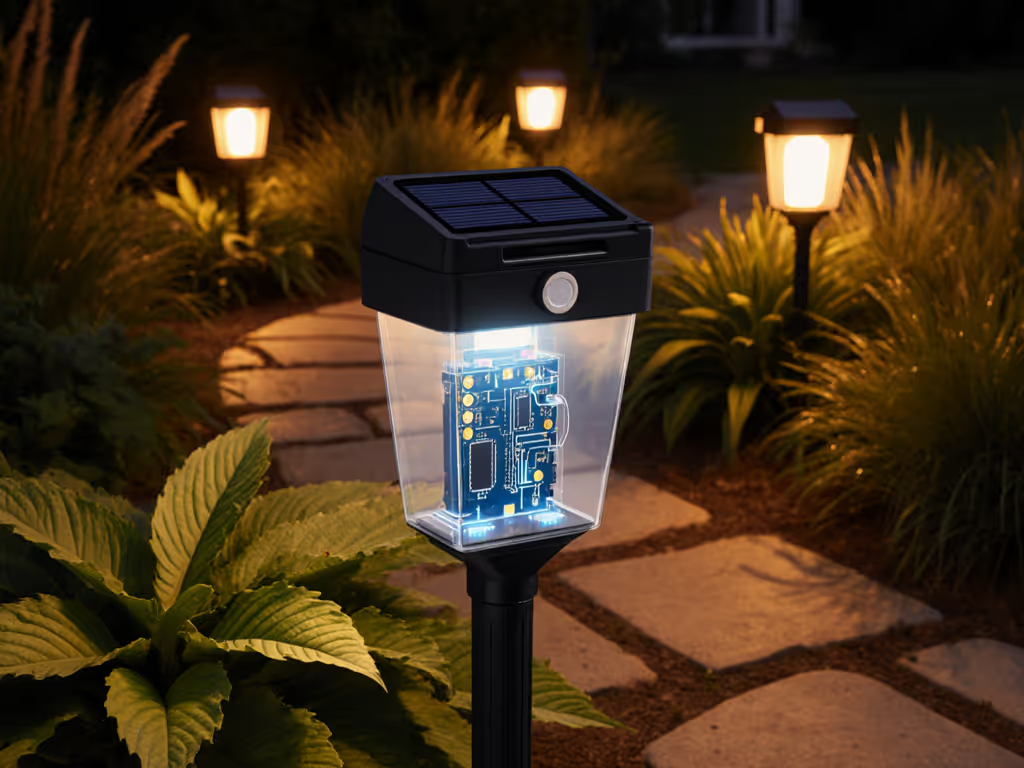
The primary culprits are straightforward: thermal cycling (big temperature swings), damp heat (humidity plus warmth), humidity freeze cycles, and ultraviolet exposure. Each one stresses the panel's components differently. Thermal cycling strains the soldered connections inside the panel. Damp heat causes the insulating material between cells to separate. Humidity freeze can damage the junction box adhesion. UV rays degrade the backsheet (the protective plastic layer facing away from the sun) until it cracks and lets water in.
In garden lights, these aren't abstract concerns. I've watched panels fog and delaminate after a single winter. That's why I test in shade, count in storms, and keep for real winters.
How Much Do Solar Panels Lose in the First Year?
Expect 2-5% power loss in the opening weeks of operation, depending on cell design. This is called light-induced degradation (LID) or boron-oxygen-induced degradation (BO-LID), and it's unavoidable. In the first 1,000 hours of sunlight exposure (roughly the first few hundred hours of real-world use), a panel's efficiency dips 1-3% as the crystalline silicon adjusts to external conditions.
Longer-term, most solar panels degrade at 0.5-3% per year after that initial stabilization phase. Over a decade, that adds up. A light rated for 800 lumen-hours of run time on day one may deliver 600-700 by year ten. Field-tested, not brochure-tested: I measure this by keeping night logs of brightness at fixed distances and comparing seasonal output.
What Is UV Degradation and How Does It Affect Performance?
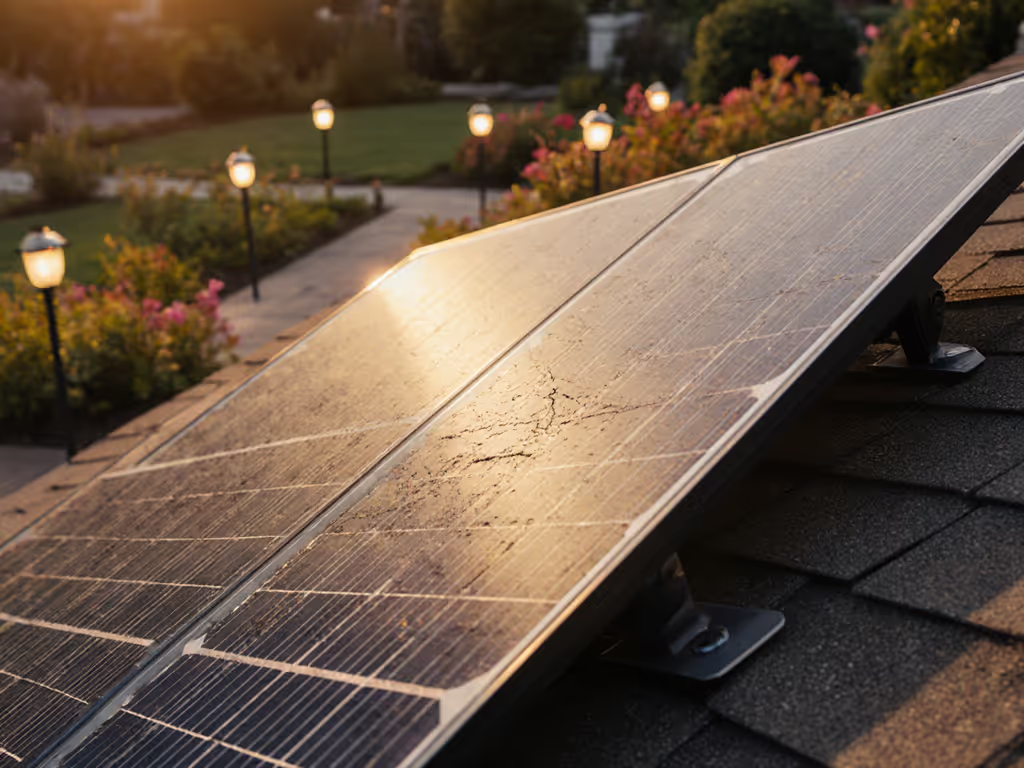
UV degradation effects strike the backsheet and encapsulation layers first. Ultraviolet radiation triggers a chemical breakdown: the protective plastic becomes brittle, loses optical clarity, and eventually cracks. Once cracks form, water migrates inside, corroding the cells and electrical contacts.
In garden lights, I've seen this play out. A solar path light left exposed for two winters developed a cloudy rear surface (the backsheet cloudiness) and then water intrusion behind the lens. Output fell 15% within eighteen months. UV damage is cumulative and irreversible; no amount of cleaning restores a degraded backsheet.
The severity depends on material quality. Panel type also matters—see our monocrystalline vs polycrystalline comparison for shade and snow performance differences. Budget fixtures use thin, low-UV-stabilized plastics. Premium fixtures use UV-hardened polycarbonate or TPE encapsulants rated to resist decades of sun. When comparing garden lights, demand backsheet spec sheets. If the vendor won't provide one, the panel is likely substandard.
How Does Temperature Affect Solar Panel Lifespan?
Thermal cycling impact is relentless. Panels sitting on sun-exposed metal housings can swing 80°F or more between midday and night, especially in spring and fall. Over thousands of cycles, solder joints crack. Cell electrical contacts separate. Micro-cracks propagate. Extreme weather (heatwaves, snowstorms, temperature swings) accelerates this damage. Dramatic temperature changes cause the panel frame and cells to contract and expand at different rates, creating mechanical stress and fracturing the glass or silicon.
In the Pacific Northwest, Upper Midwest, and Northeast (where my test sites are) freeze-thaw cycles are the hidden killer. Water seeps into microcracks during a wet day, freezes at night, and expands, widening the damage. After three winters, panels that looked fine in summer fail on the first cloudy week of November.
Damp heat (sustained humidity above 70% at temperatures above 80°F) compounds the problem. The encapsulant separates from the cells, and moisture accelerates corrosion. Coastal gardens and shaded humid sites experience this faster. If you garden in extreme heat, see our head-to-head tests of desert-proof solar lights that resist thermal degradation.
What Is Potential-Induced Degradation and Why Should You Care?
Potential-induced degradation (PID) is a silent failure mode that typically appears 4-10 years into operation. It occurs when a voltage difference exists between the solar cells and the metal frame or glass, especially under high temperature and humidity. This electrical potential triggers ion migration (sodium and other contaminants move through the insulating layer), damaging it and reducing power output.
PID is insidious because it's invisible. You won't see visible defects; output just drops unexpectedly. Some panels are more susceptible based on cell design, frame material, and encapsulant type. Premium manufacturers mitigate PID through better material selection and design; budget panels often lack PID-resistant architecture.
In garden light context, this is a reason to buy from vendors who disclose PID testing results or use reputable cell manufacturers. If the vendor's spec sheet doesn't mention PID mitigation, ask why.
Why Do Some Solar Panels Fail Before Others?
Manufacturing defects, material quality, and design are decisive. Cheap cells use lower-grade silicon with more oxygen content, making them prone to faster LID and LeTID (light and elevated temperature-induced degradation). Poor solder joints fail under thermal stress sooner. Thin backsheets and low-grade encapsulants degrade from UV exposure within 3-5 years.
Shading and bypass diodes matter too. When a panel is shaded, bypass diodes divert current to prevent hot spots. But if shading is persistent (like beneath a tree branch), the diodes overheat and eventually fail, leading to permanent damage. To optimize charging under trees, use our dappled shade charging guide.
This is why I photograph and log beam spill patterns before and after every winter. A light that performs perfectly in full sun may drop 30% output within two years if it sits in partial shade (not because of normal degradation, but because shading stress degrades the bypass diodes and cells unevenly).
What Are the Real-World Implications for Garden Lighting?
A solar path light rated 800 lumens on a lab bench may deliver 500-600 actual lumens by year three in a variable climate, and far less if shaded or in cold regions. This isn't fraud (it's predictable degradation), but marketing almost never mentions it.
Long-term performance metrics matter far more than opening brightness. A light that starts at 600 lumens and loses 0.5% per year is more valuable than one that starts at 1000 lumens and drops 2% annually. After ten years, the first keeps 570 lumens; the second falls to 800. But that second one got your attention because of the number.
Reliability in winter is nonnegotiable. Any panel exposed to freeze-thaw cycling should use boron-free silicon cells (if the vendor discloses this) or at least encapsulants designed for humidity-freeze environments. Most budget lights don't survive three winters without significant output loss. Premium lights (those using high-efficiency cells, stainless hardware, polycarbonate lenses, and sealed junction boxes) often run at 75-85% of rated output even after a decade, tested in shade, counted in storms, kept for real winters.
Where Should You Look Beyond the Spec Sheet?
Demand transparent, field-tested long-term performance data. If you want to validate claims at home, follow our solar light testing guide. Ask vendors:
- What is the panel's certified degradation rate (not just a range, but actual test data)?
- Is the backsheet UV-stabilized, and for how many years?
- Has the panel been tested for PID mitigation?
- What bypass diode design is used, and how does it perform under partial shading?
- Are there multi-year winter performance logs available?
If the vendor deflects or quotes only first-year brightness, the product is brochure-tested, not field-tested. Walk away.
Genuine durability requires transparent caveats, honest output expectations, and evidence of real-world testing. Your garden lights should outlast the hype, and they will, if you demand measurement-first proof over showroom sparkle. That's when you stop replacing lights every few years and start keeping them for real winters.
Related Articles