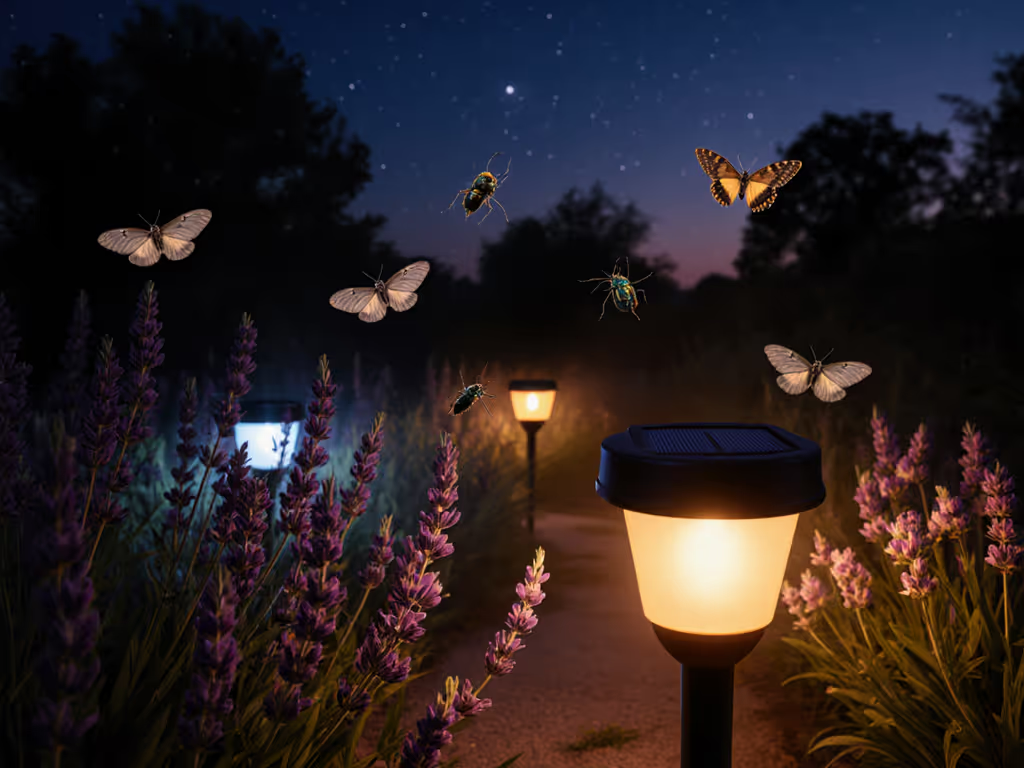
Plant-Friendly Solar Kelvin: Warm Light That Honors Night
By Maya Lindstrom • 11th Dec
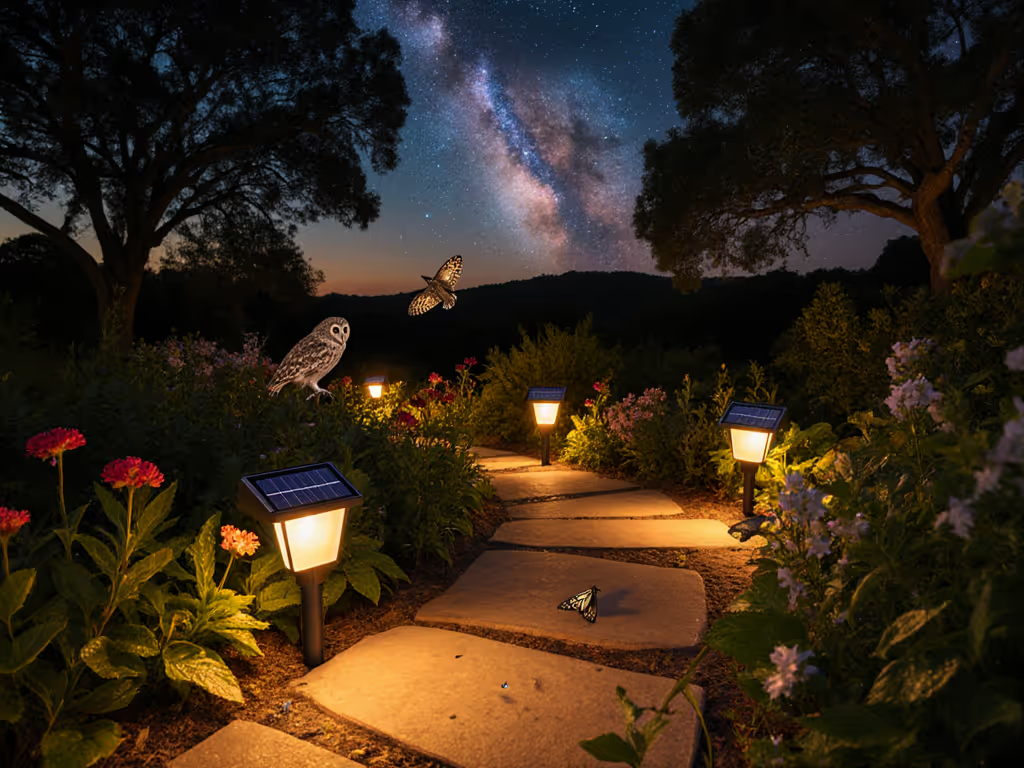
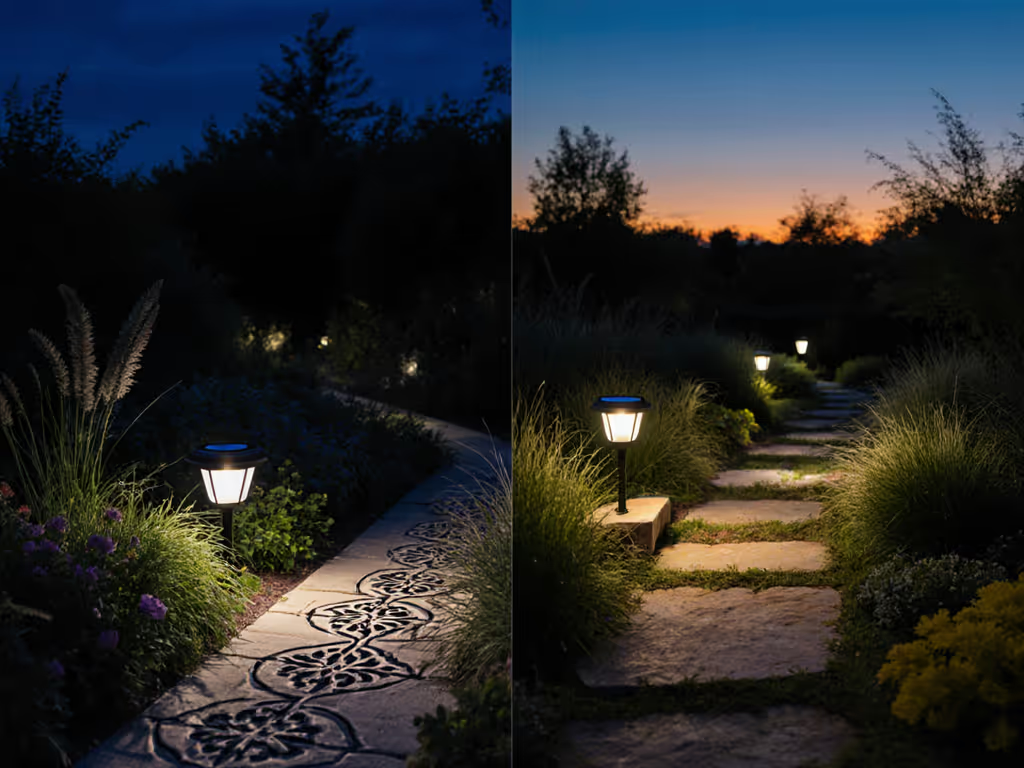
When selecting solar light color temperature for your garden, plant-friendly lighting becomes a quiet act of respect, honoring both the sanctuary you've nurtured and the living rhythms beneath your feet. I learned this not from textbooks, but years ago when a neighbor lingered at my fence one autumn evening, commenting how much she loved walking through my garden at night. Steps were clear, plants glowed like they'd been kissed by candlelight, and not a single fixture stared back. That's when it clicked: gardens thrive in darkness too. Today, as we chase sustainability with solar solutions, we must ensure our lights don't disrupt the very ecosystems we're trying to illuminate. Because beautiful light hides the source and honors the night.
Why Warmth Matters: Beyond Aesthetics to Plant Physiology
We often choose lighting for how it feels, that golden-hour glow that makes stone paths inviting and ferns feel lush. But beneath the surface, nighttime plant physiology is deeply sensitive to artificial light. Research confirms plants absorb minimal green/yellow light (which is why they reflect it, appearing green to us), while blue and red wavelengths directly fuel photosynthesis. Standard "cool white" solar lights (4000K+) overload gardens with blue-rich light, signaling plants to keep growing when they should be resting. For a practical breakdown of lumens, beam angles, and choosing warm color temperatures for glare-free paths, see our glare-free solar lighting guide. This disrupts circadian rhythms, stresses foliage, and even alters bloom cycles. One Pacific Northwest gardener reported her hydrangeas blooming in November after installing mismatched path lights, a sign of light pollution confusion.
Edges soft, sources hidden: this isn't just about ambiance. It's about aligning with nature's quiet hours.
Conversely, lights at 2700K or below emit minimal blue light. Think of it as emitting the same warm spectrum as fireflies or a candle: enough to navigate safely, but not enough to trick plants into thinking it's daytime. This preserves:
- Dormancy cycles: Critical for perennials surviving cold climates
- Pollinator rest patterns: Moths and bats need true darkness to hunt
- Root energy reserves: Plants conserve resources for morning growth
The Pollinator-First Light Balance
Pollinator-friendly lighting isn't a luxury, it's ecological responsibility. Insects navigate by moonlight, and blue-rich LEDs mimic streetlights that disorient moths and beetles. But warmth alone isn't enough. I've seen amber-tinted path lights (often marketed as "bug-free") still casting harsh pools that fracture habitat connectivity. True pollinator support requires:
- Shielding: Full cutoff fixtures preventing upward spill
- Intensity: Under 8 lumens per fixture for beds
- Timing: Dusk-to-dawn sensors skipping midnight hours
A recent UK study noted native moth populations rebounded 40% in gardens using 2200K shielded fixtures versus standard 3000K solar stakes. Your shaded fern bed? It's not just a design element (it's a micro-habitat). Let it breathe in darkness.
Choosing Solar Without Sacrificing Sanctuary
Solar lighting tempts us with "set and forget" simplicity. Yet too many installations fail plants and people because of mismatched kelvin rating for gardens. We've all seen it: blinding white spots under maple trees, or dead batteries by December. Here's how to choose wisely:
3 Principles for Plant-Conscious Solar Design
-
Embrace the 2700K Boundary
Avoid anything above 3000K, even "warm white" often hits 3500K+. True plant-friendly warmth (2200K-2700K) emits a sunset-like hue. Check packaging for exact CCT (Correlated Color Temperature), not just "warm" claims. Why it matters: Higher kelvins = more blue = disrupted melatonin in plants. One designer in Minnesota swapped 3500K to 2700K path lights and saw fewer winter-kill losses in her hostas. -
Demand Directional Control
Solar panels need sun, but light shouldn't scatter. Prioritize ground-hugging fixtures with optical lenses (not bare LEDs). Look for "30-degree beam spread" or "glare-reduced" specs. Field test: On a cloudy afternoon, hold your hand 12" above the fixture. If you see direct glare, pass. Plants need diffuse reflection, not spotlighted leaves. -
Size for Your Microclimate
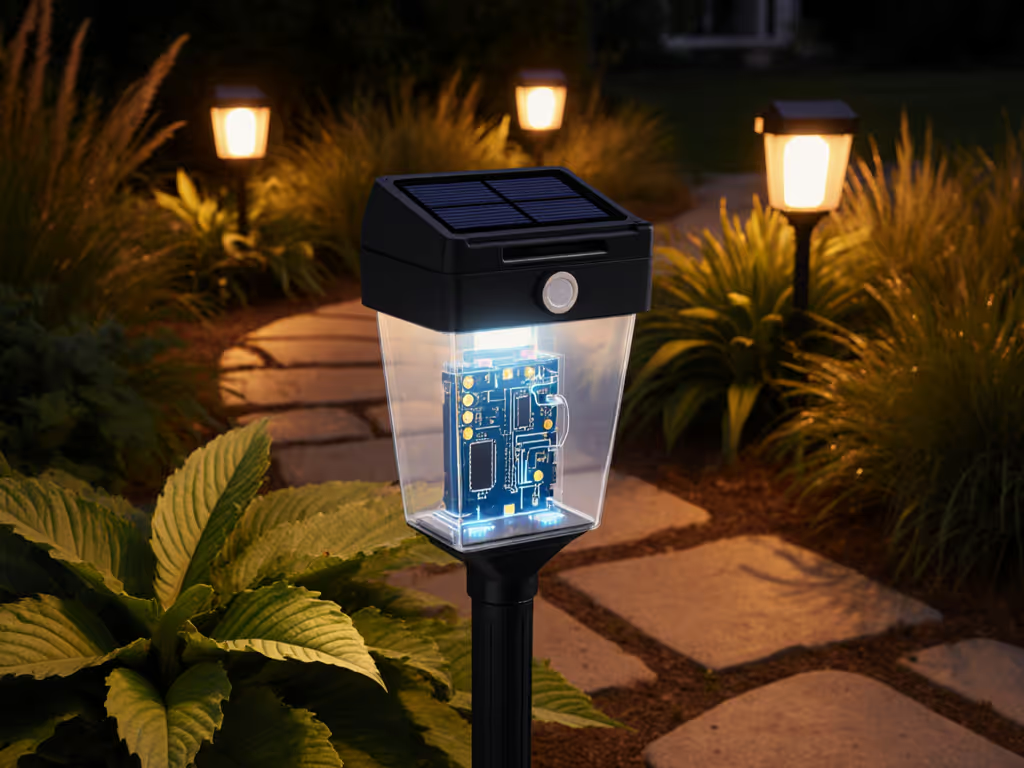
Short winter days demand efficiency. In the Northeast or Upper Midwest, choose panels ≥1.5W with LiFePO4 batteries (not old NiMH) for cold-weather resilience. For tree-shaded yards, seek models with detachable panels (like some dual-charging lanterns) you can mount on a south-facing fence. Pro tip: Place lights along paths first, they need less intensity than accent spots.
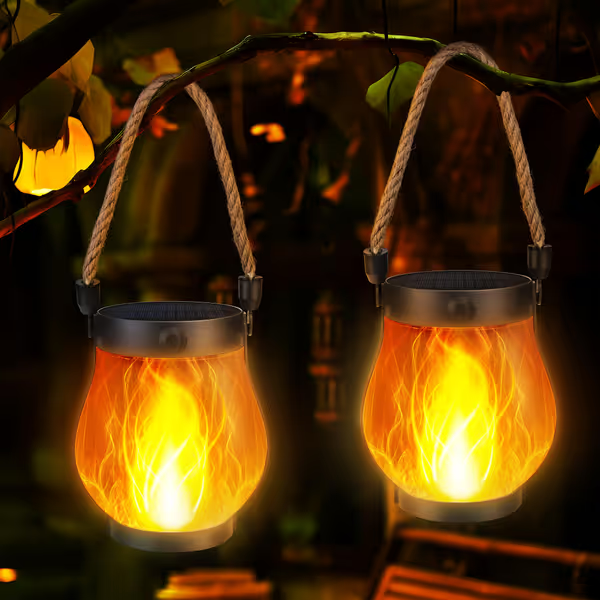
Solar Flame Lantern (2-Pack)
Dual-charging flame lanterns provide ambiance, even in shade or cloudy weather.
$28.04
Charging ModesSolar & USB Dual-Charging
Charging ModesSolar & USB Dual-Charging
Pros
Realistic flickering flame effect for ambiance.
USB charging ensures consistent light, no matter the sun.
Cons
Smaller than some expect for primary lighting.
Customers find these solar lanterns visually appealing, with one noting they look great as the lights flicker, and appreciate their flame effect that resembles real fire. The lanterns are rechargeable via USB and stay on for many hours, with one customer mentioning they work even when it's cloudy. While some customers find them appropriately sized, others say they're smaller than expected. The functionality receives mixed reviews, with some reporting complete failure after two months of use.
Customers find these solar lanterns visually appealing, with one noting they look great as the lights flicker, and appreciate their flame effect that resembles real fire. The lanterns are rechargeable via USB and stay on for many hours, with one customer mentioning they work even when it's cloudy. While some customers find them appropriately sized, others say they're smaller than expected. The functionality receives mixed reviews, with some reporting complete failure after two months of use.
The Shaded Garden Reality Check
Partial shade is where most solar systems fail. For product picks that actually charge and run in low light, see our best solar lights for shady gardens. But light spectrum impact isn't the only issue, battery chemistry and panel placement are equally critical. If your garden gets under 4 hours of direct sun:
- Avoid combo units: Stake-mounted panels get blocked by foliage. Seek remote-panel systems where you mount the solar cell separately.
- Verify winter index: Some brands publish "minimum operational temperature" (e.g., "-20°C"). Skip anything unspecified.
- Check dimming curves: Quality lights gradually fade as batteries deplete, not abrupt shutdowns. Test reviews for phrases like "lasted until 10 PM on December 15th".
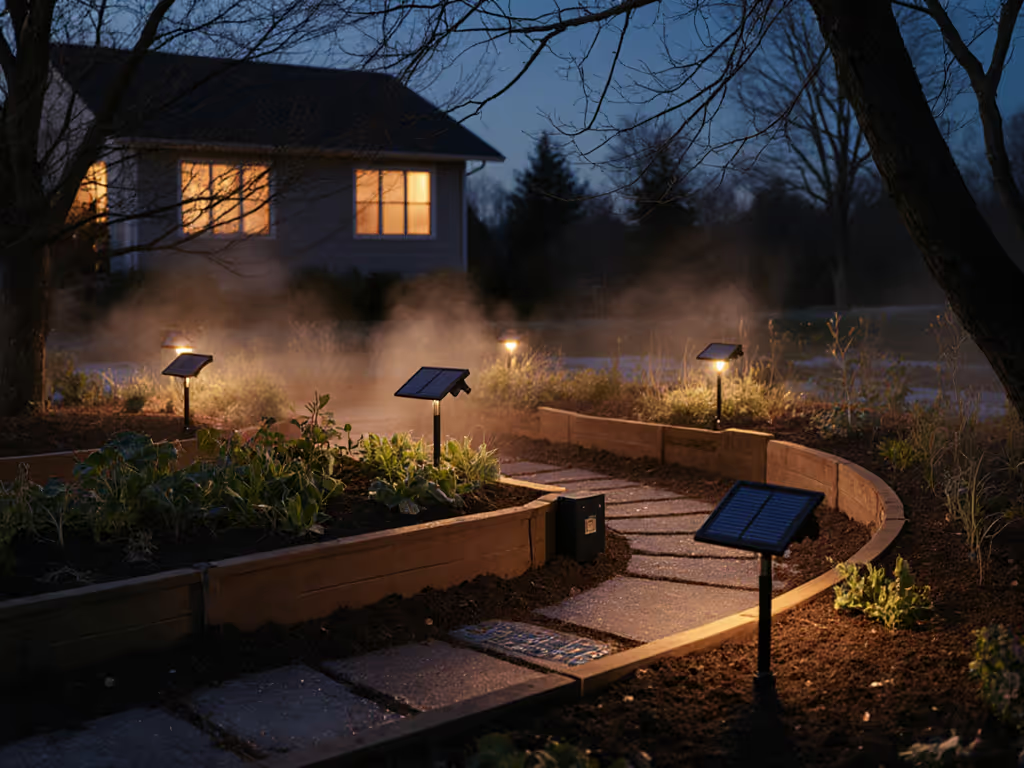
I advised a Vermont client replacing icy-blue path lights under oak canopies. We chose low-profile 2700K fixtures with tiltable panels mounted on her shed roof. Seven years later, they're still highlighting stone steps without disturbing the salamander habitat below. Sustainable lighting isn't about the brightest beam, it's about right-sizing energy to the space.
Lighting That Listens to the Land
Your garden knows its own rhythms. When we impose harsh, cool-toned light, we override millennia of evolution. But when we choose solar light color temperature deliberately, warm, shielded, and precisely calibrated, we do more than avoid glare. We participate in the night's quiet work. The soil microbes processing nutrients, the roots stretching toward morning dew, the pollinators navigating by starlight... they all depend on darkness to thrive.
Remember that neighbor who thanked me years ago? She wasn't just praising pretty lighting. She was feeling the relief of not straining her eyes. Of hearing crickets without LED hum. Of moving through the garden as nature intended, guided by glow, never glare. That's the gold standard.
Your Actionable Next Step
Before buying another solar light, walk your garden at dusk. Stand where paths curve, beds meet lawn, or decks transition to yard. Ask: Does this spot need to be seen... or just felt? Then choose fixtures where edges soft, sources hidden, and kelvin ratings stay firmly below 3000K. To plan for performance changes through spring, summer, fall, and winter, read our seasonal solar light performance guide. Your plants, and every creature depending on this patch of earth, will thank you.
Maya Lindstrom curates lighting that disappears into the landscape, revealing only the garden's innate beauty. She's been shaping dark-sky-friendly spaces since 2008, teaching workshops from Portland to the Berkshires.
Related Articles