Preservation-Compliant Solar Lights for Historic Homes
By Hana Takahashi • 19th Jan
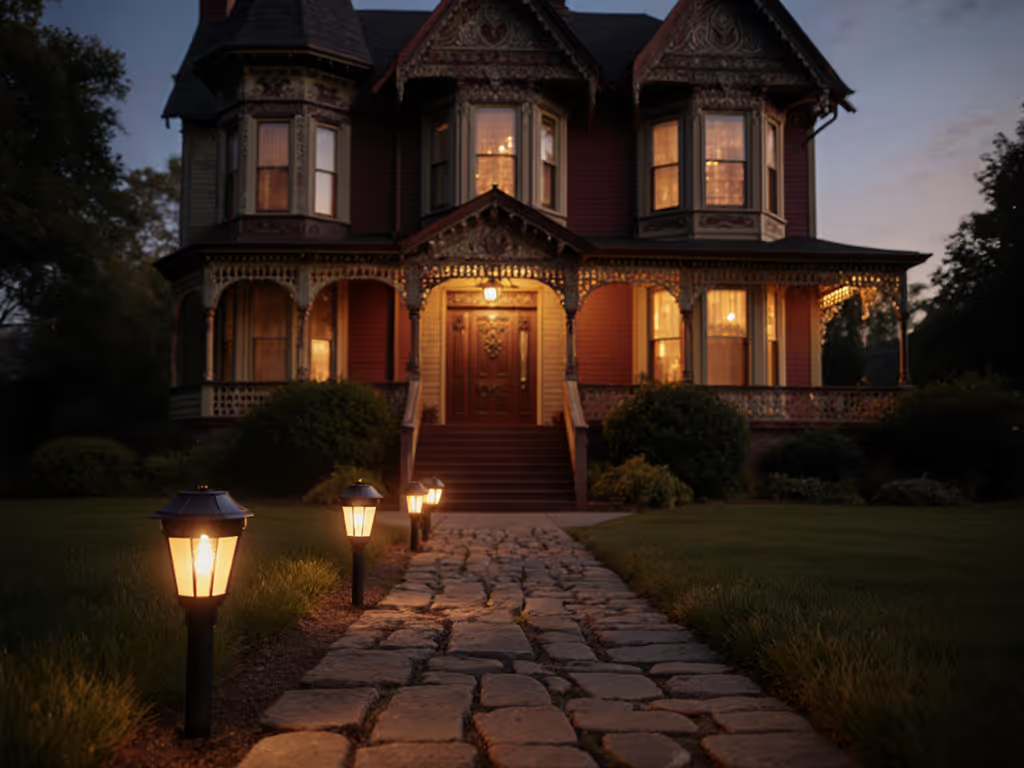
For homeowners of historic properties seeking historical property solar lighting, the path forward requires balancing preservation standards with ecological responsibility. Preservation-compliant solar lights represent more than functional illumination. They embody a commitment to honoring architectural heritage while respecting the natural rhythms of our shared environment. In my work documenting wildlife behavior around historic gardens, I've observed how thoughtful lighting choices can preserve both cultural legacy and ecological integrity. The most successful installations share common traits: they're warm, shielded, and time-limited (light that wildlife can live with).
Understanding Dual Responsibilities: Preservation and Ecology
Historic homeowners face a unique challenge, because lighting must satisfy both preservation guidelines and contemporary environmental standards. Heritage lighting regulations often emphasize visual compatibility with historic character, but forward-thinking preservation commissions increasingly recognize that night lighting must also consider its ecological impact.
Key Preservation Principles for Lighting
When evaluating lighting options, historic preservation boards typically assess:
- Visibility from public rights-of-way (as noted in National Park Service guidance)
- Impact on historic building materials and surfaces
- Compatibility with architectural style and period
- Reversibility of installations
Local historic preservation commissions focus on maintaining neighborhood character, scrutinizing how lighting affects the visual experience of historic streetscapes. Crucially, they're increasingly open to solutions that employ non-invasive installation methods that avoid damaging original materials, a principle that aligns perfectly with dark-sky recommendations.
Wildlife-Friendly Lighting Essentials
My research confirms that lighting for historic homes must also consider nocturnal ecosystems. Preservation-compliant lighting should incorporate:
- Warm color temperatures (2700K or lower) to minimize disruption to wildlife
- Full cutoff fixtures that direct light downward where needed
- Appropriate intensity that provides safety without glare
- Timed operation that respects natural darkness cycles
Recent studies show that historic properties with poorly designed lighting experience disrupted pollinator activity and altered bird migration patterns near their grounds. The solution isn't darkness, but rather carefully considered illumination that respects both history and ecology.
Timers are kindness, both to your historic neighbors and the wildlife that shares your space.
Strategic Implementation: Lighting That Honors Heritage
Period-Accurate Lighting Designs with Modern Sensibility
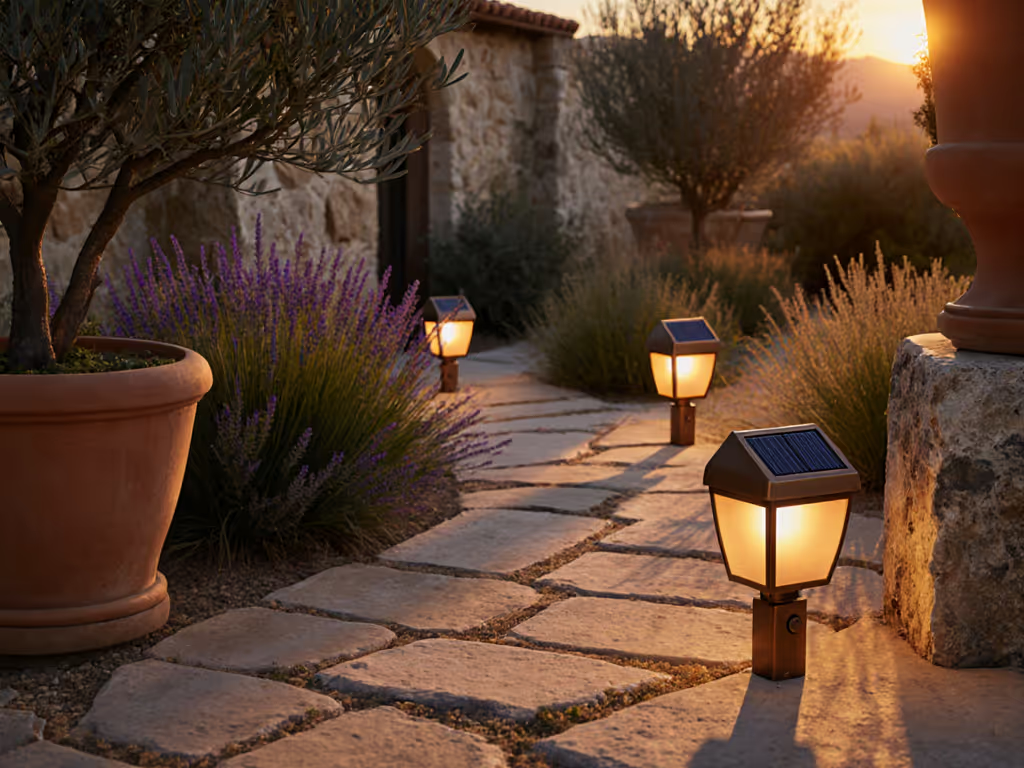
Period-accurate lighting designs need not sacrifice ecological responsibility. Modern preservation-compliant solar lights can mimic historic gas lamps or early electric fixtures while incorporating:
- Amber-toned LEDs instead of blue-rich white light
- Shielded fixtures that prevent glare and skyglow
- Low-profile solar panels that blend with landscape features
- Brushed brass or powder-coated finishes that match historic materials
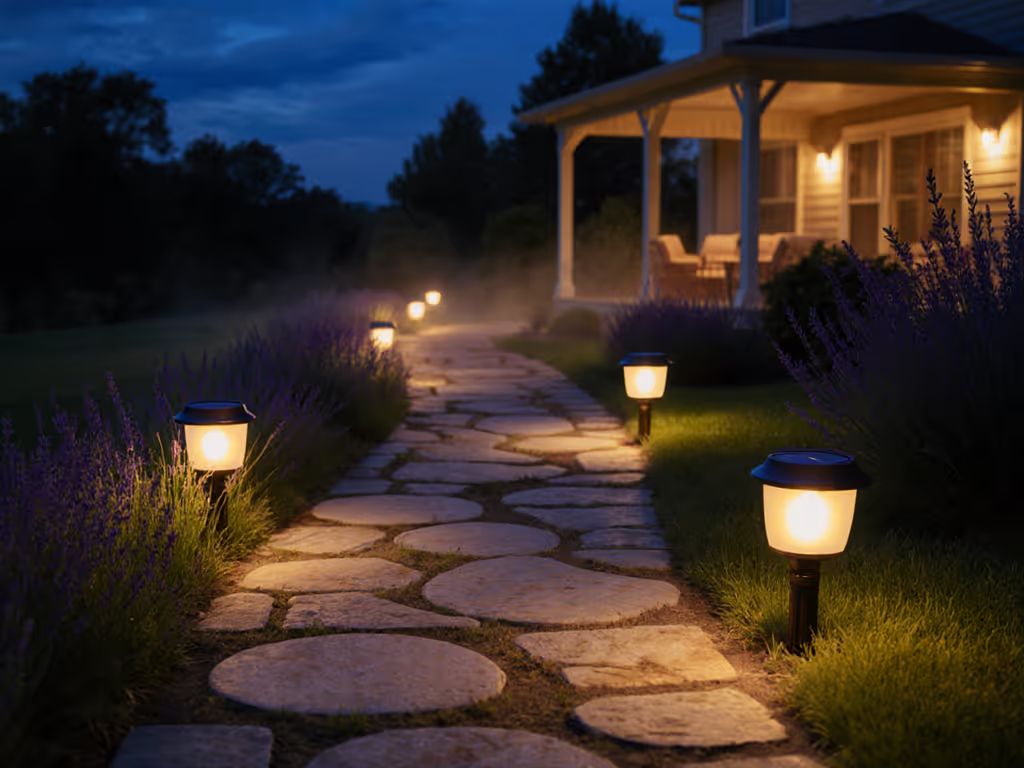
Many preservation commissions now welcome solar lighting solutions that recreate the soft, warm glow of historic lighting while avoiding the visual intrusion of modern fixtures. I've documented garden paths illuminated with discreet solar stakes that successfully guide visitors at night while remaining nearly invisible during daylight hours, preserving the historic character without compromising safety.
Non-Invasive Installation Methods
One of the greatest advantages of modern solar lighting for historic properties is the ability to implement non-invasive installation methods that avoid damaging historic surfaces. Consider:
- Ground-mounted path lights that require only minimal soil disturbance
- Freestanding post fixtures rather than wall-mounted units
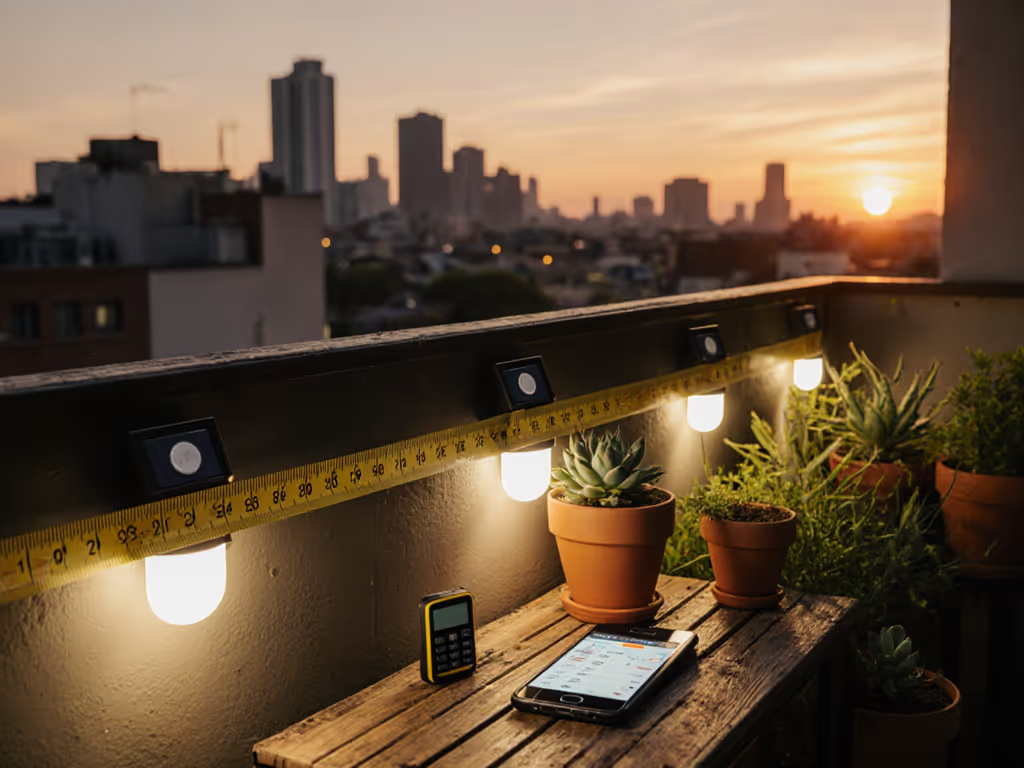
- Remote solar panels positioned away from protected surfaces
- Rechargeable stake lights that eliminate wiring altogether
These approaches satisfy preservation requirements by avoiding alterations to historic building materials while providing the necessary illumination. For help choosing non-invasive mounting methods, see our stake vs wall vs hanging mounting guide. In one community garden project, we achieved preservation approval by placing solar panels on a modern outbuilding rather than the historic structure, with wiring discreetly buried along existing pathways.
Creating Cohesive, Respectful Historic Garden Illumination
Strategic Placement Principles
Effective historic garden illumination requires thoughtful placement that serves multiple purposes:
- Safety first: Illuminate transitions, steps, and pathway curves
- Character preservation: Maintain the garden's historic feel after dark
- Ecological consideration: Minimize light trespass into wildlife habitats
Rather than flooding historic gardens with uniform brightness, implement layered lighting that creates gentle transitions from brighter to darker zones. For specific placement techniques by area, use our optimal garden lighting layout guide. This approach preserves the sense of discovery inherent in historic landscapes while meeting both preservation and ecological standards.
Performance Considerations for Historic Settings
When selecting solar lights for historic properties, prioritize:
- True dusk-to-dawn performance even during shorter winter days
- Cold-weather battery technology that maintains function below freezing
- Shade-tolerant solar panels for gardens with mature trees
- Adjustable intensity settings to accommodate seasonal changes
Many historic properties feature mature landscaping that creates challenging lighting conditions. If your site has dense canopy or north-facing beds, see our best solar lights for shady gardens for models that charge reliably under trees. Advanced solar lights with remote panels or higher-efficiency photovoltaic cells can overcome these challenges while maintaining the historic character of the property.
Practical Implementation Roadmap
Working with Preservation Commissions
When proposing solar lighting for historic properties:
- Consult early with your local preservation office
- Present options showing minimal visual impact during daylight hours
- Highlight how your selection meets dark-sky principles
- Include plans demonstrating non-invasive installation methods
Documentation showing how your lighting plan preserves historic character while supporting ecological health significantly improves approval chances. Preservation commissions increasingly recognize that responsible lighting enhances rather than diminishes historic properties.
Evaluating Products for Authenticity and Performance
When reviewing potential lighting solutions, look for:
- Color temperature specifications (2700-3000K maximum)
- Clear beam spread information (not just lumens)
- Cold-weather performance data
- Reputable IP ratings for weather resistance
- Serviceable components and warranties
The most successful preservation-compliant installations feature products that balance authenticity with modern performance needs. To decode specs like color temperature, beam angle, and IP ratings, read our lumens vs watts guide. I've found that homeowners achieve the best results when they prioritize quality over quantity, fewer, well-placed fixtures that create atmosphere without overwhelming the historic setting.
Preserving Heritage Through Thoughtful Illumination
Historic property lighting represents an opportunity to demonstrate respect, not only for architectural heritage but for the natural environment that surrounds it. The most successful installations honor both the past and the present, creating spaces where history and ecology coexist harmoniously.
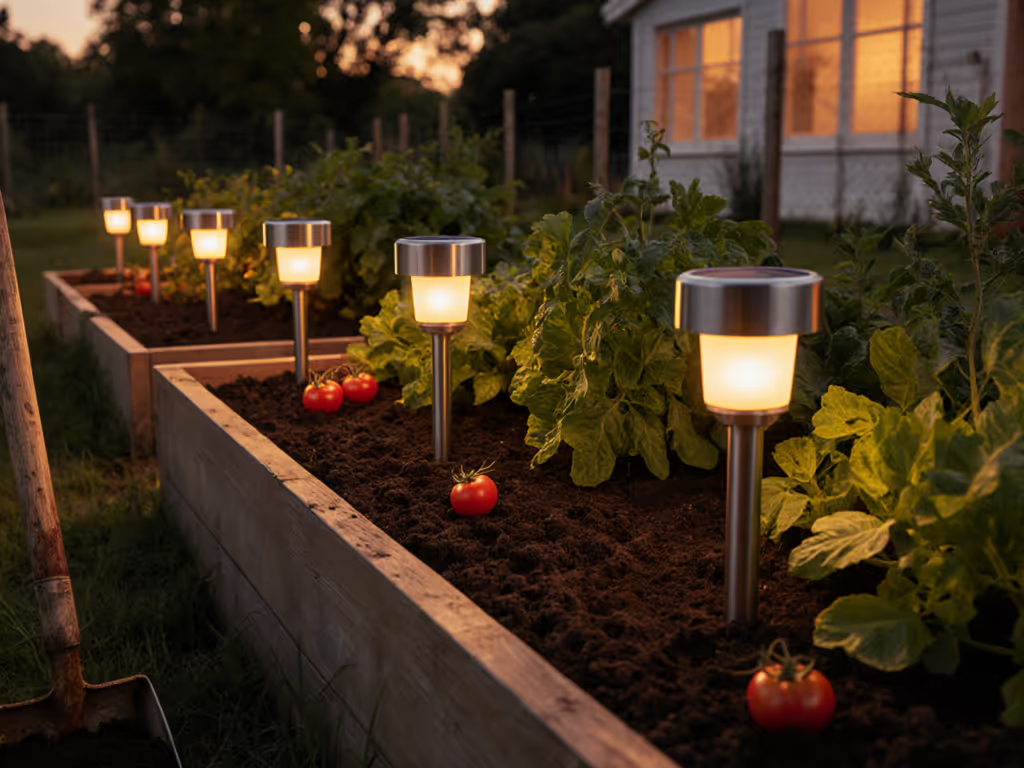
As I observed while documenting bat activity near a historic community garden, the difference between thoughtful and thoughtless lighting is immediately apparent. When we choose fixtures that balance human needs with ecological responsibility, we create spaces that feel both safe and authentic after dark.
Selecting preservation-compliant solar lights isn't about compromise. It is about thoughtful integration that respects multiple values. By choosing warm, shielded, and appropriately timed lighting, we honor both our architectural heritage and our responsibility to the natural world. These choices create spaces where visitors can experience history as it was intended (under a dark sky that preserves both stars and stories).
For those interested in exploring further, the National Park Service's Technical Preservation Services offers guidance that bridges historic preservation and responsible lighting practices. Their resources demonstrate how contemporary needs can be met while respecting the character that makes historic properties valuable to our shared heritage.
Related Articles