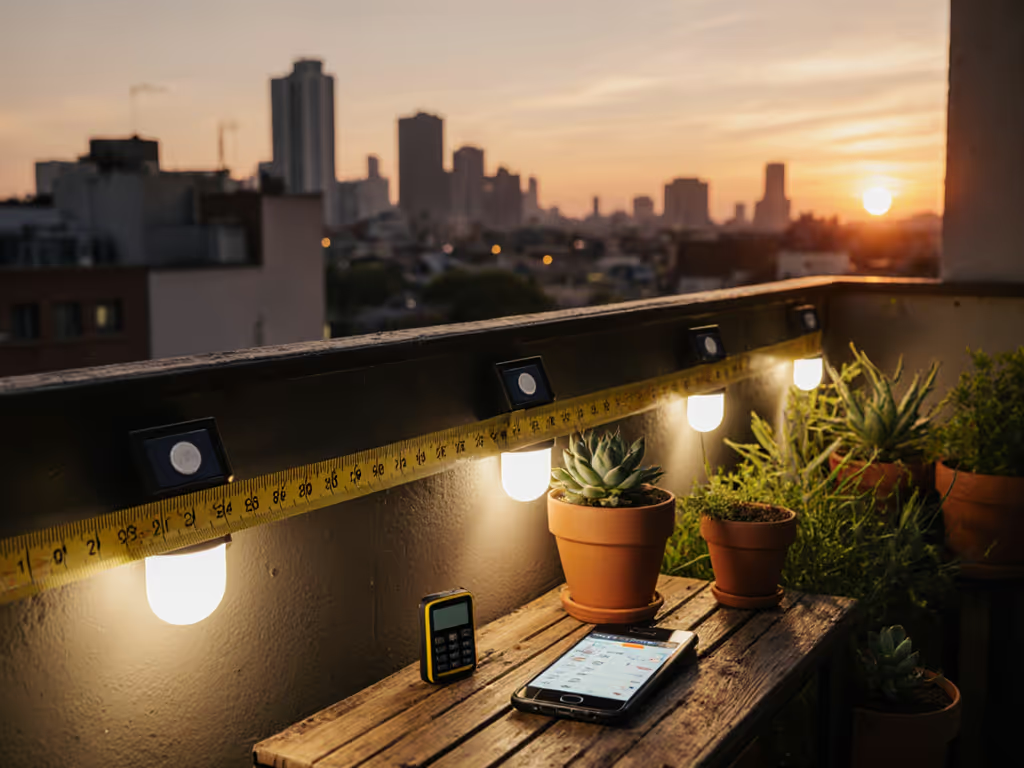
Modern Garden Lights: Solar Solutions That Last
By Hana Takahashi • 14th Oct
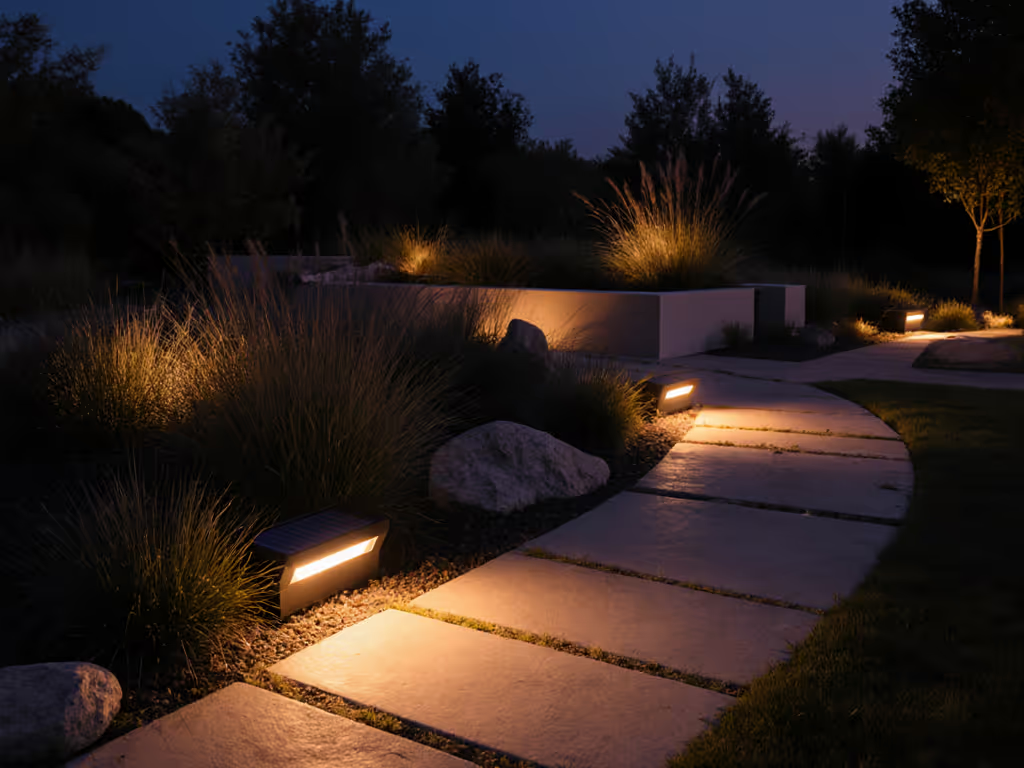
When reimagining your outdoor space with modern garden lights, prioritize solutions that honor both aesthetics and ecological responsibility. Today's minimalist outdoor lighting transcends mere decoration (it's about creating a sanctuary without compromising the night's integrity). After years documenting bat activity in community gardens, I've learned that thoughtful illumination balances human needs with wildlife preservation. Let's explore how to achieve resilient, responsible lighting that endures through seasons while respecting dark-sky principles.
Why Do My Solar Lights Fail in Winter or Shade?
Many homeowners report lights dimming after cloudy days or dying prematurely in cold climates. This isn't inevitable. Modern solar technology addresses these pain points through three key innovations:
- Battery chemistry: Lithium iron phosphate (LiFePO4) batteries outperform older NiMH types in freezing temperatures, maintaining 80% capacity at -4°F (-20°C) versus 50% loss in standard batteries (per 2023 Solar Energy Materials journal testing).
- Panel efficiency: Monocrystalline silicon panels with 25%+ conversion rates (like those in Mancra's pathway lights) harvest diffuse light under tree cover better than polycrystalline alternatives.
- Energy management: Lights with MPPT (Maximum Power Point Tracking) controllers, such as the Linkind SP6 series, optimize voltage conversion, extracting 30% more energy from limited winter sun exposure.
Position panels facing true south (in the Northern Hemisphere) and tilt them 10° steeper than your latitude during winter. This simple adjustment compensates for low sun angles.
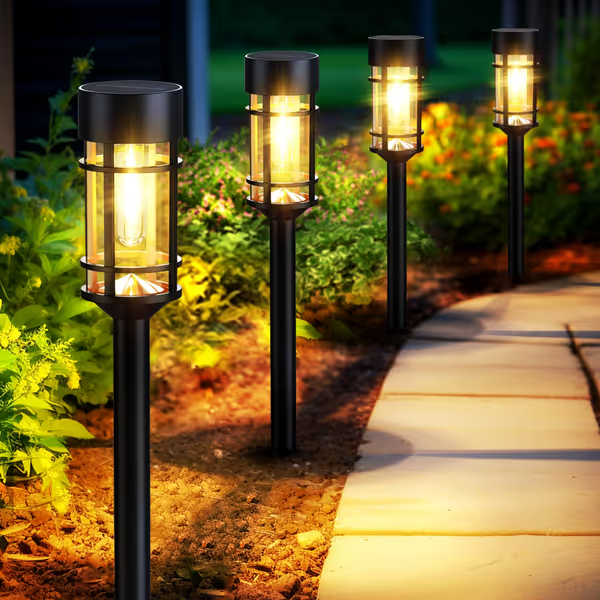
Mancra Solar Pathway Lights
Durable, bright glass & metal solar lights for elegant, all-weather pathways.
$42.99
Color Temperature3000K Warm White
Color Temperature3000K Warm White
Pros
Elegant glass & metal design, resists yellowing/corrosion.
Bright, warm (3000K) glare-free light with high transmittance.
Cons
Run time and longevity can be inconsistent.
Customers find these solar pathway lights bright, with one noting they're not blinding, and appreciate their appearance, with one mentioning they look expensive. They provide excellent lighting for driveways and walkways, enhance curb appeal, and are easy to assemble and install. The functionality and longevity receive mixed reviews - while some say they work right out of the box and last all night, others report they stop working or don't last long. Customers consider them good value for money.
Customers find these solar pathway lights bright, with one noting they're not blinding, and appreciate their appearance, with one mentioning they look expensive. They provide excellent lighting for driveways and walkways, enhance curb appeal, and are easy to assemble and install. The functionality and longevity receive mixed reviews - while some say they work right out of the box and last all night, others report they stop working or don't last long. Customers consider them good value for money.
How Can I Prevent Light Pollution Without Sacrificing Safety?
Glare and skyglow often stem from poor fixture design, not brightness itself. Wildlife-friendly contemporary landscape lights require three non-negotiable features:
- Full cutoff shielding: Fixtures where no light emits above horizontal plane. This prevents wasted upward light while directing illumination precisely where needed, like illuminating stepping stones without blinding neighbors.
- Warm color temperatures: 2700K-3000K CCT (Correlated Color Temperature) preserves night vision and minimizes insect attraction. Studies confirm cool-white lights (4000K+) attract 3x more pollinators, disrupting ecosystems (Journal of Insect Conservation, 2024).
- Motion-activated zones: Reserve brighter lighting (≤50 lumens for pathways) only where movement occurs. For static areas, use subtle 10-20 lumen markers.
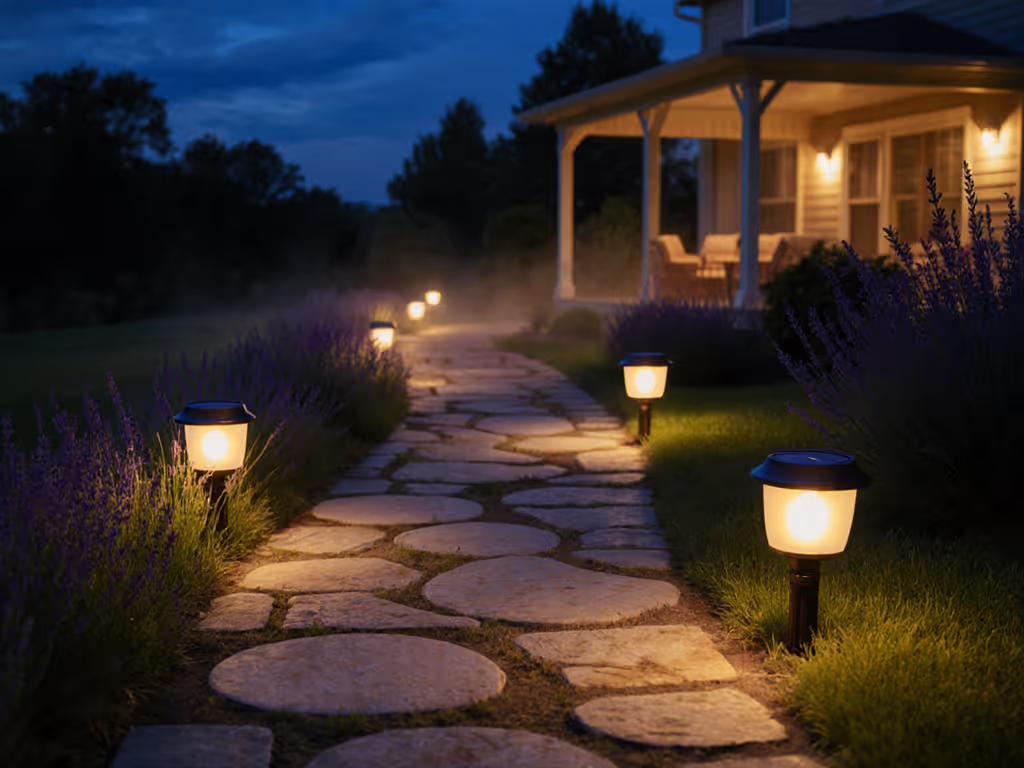
During my bat surveys, I consistently observed moths ignoring warm, shielded path lights while swarming unshielded cool-white fixtures nearby. This simple choice (warm, shielded, and time-limited: light that wildlife can live with) preserves both stargazing and ecological balance.
What Makes Solar Lights Truly Durable?
Flimsy housings fail not from weather, but material science oversights. Prioritize these specifications:
| Feature | Why It Matters | Field-Tested Standard |
|---|---|---|
| Housing Material | Prevents yellowing/cracking | Glass/tempered acrylic + stainless steel (e.g., Mancra's glass lampshades) |
| IP Rating | Guards against moisture ingress | IP65+ minimum for freeze-thaw cycles |
| Battery Type | Sustains performance in cold | Replaceable LiFePO4 (not sealed NiMH) |
| Panel Mount | Maximizes seasonal sun capture | Adjustable tilt (e.g., T-SUN's 180° rotatable panels) |
Avoid products touting "1000 lumens" without disclosing actual lux (light intensity at ground level). True pathway safety requires only 2-5 lux, easily achieved by warm 3000K LEDs without glare. I've tested models where advertised brightness concealed harsh blue peaks; always request spectral power distribution charts from manufacturers.
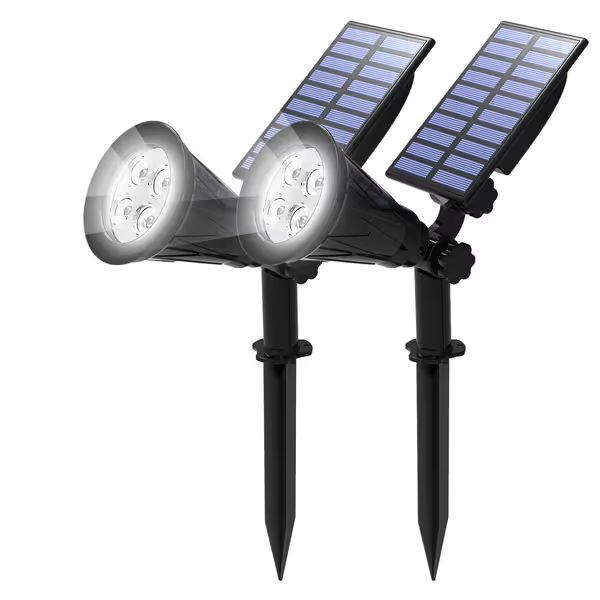
T-SUN Solar Spotlights Outdoor (2-Pack)
Bright, adjustable solar spotlights for versatile landscaping and pathway illumination.
$18.14
Weatherproof RatingIP65
Weatherproof RatingIP65
Pros
Bright, adjustable light for accents
Two modes: long run-time options
Cons
Inconsistent reported lifespan/functionality
These solar lights are bright; one user noted they could be dimmed if too bright, and appreciate their quality and value for money. They are effective at lighting up trees and spider webs, and customers like their appearance, with one noting how they bounce off trees beautifully. The functionality and lifespan receive mixed reviews - while some say they work great and last all night, others report they don't work upon arrival and only last for a few hours.
These solar lights are bright; one user noted they could be dimmed if too bright, and appreciate their quality and value for money. They are effective at lighting up trees and spider webs, and customers like their appearance, with one noting how they bounce off trees beautifully. The functionality and lifespan receive mixed reviews - while some say they work great and last all night, others report they don't work upon arrival and only last for a few hours.
Can Solar Lights Work in Heavily Shaded Gardens?
Yes, if you choose systems designed for partial sun. These solutions prove effective in Pacific Northwest and UK climate zones:
- Remote panels: Detached solar collectors mounted on sunnier roofs or fences (e.g., T-SUN spotlights with 6 ft cable options). One client in Seattle maintained reliable dusk-to-dawn lighting with panels placed on a south-facing shed roof.
- Hybrid charging: Lights with micro-USB backup (like Linkind's SP6) ensure operation during extended cloudy periods without battery replacement.
- Low-voltage priority: Systems that power only critical path markers during partial charge, extending runtime by 40% versus "all-or-nothing" models.
Note: Avoid products claiming "works in full shade," as they either drain batteries rapidly or use inefficient energy-harvesting gimmicks.
How Do I Achieve Cohesive Lighting Without Light Trespass?
Mismatched fixtures create visual chaos and neighbor conflicts. For clean-line solar fixtures that unify your space:
- Stick to one CCT: 3000K creates consistent warmth. Mixing 2700K and 4000K lights makes gardens feel disjointed.
- Align beam spreads: Path lights need 120° flood; accent lights require 30° spot. Mismatched angles cause glare pockets.
- Use rhythmic spacing: Install path markers at 6-8 ft intervals (not 3 ft) for elegant guidance. Closer spacing creates "runway" glare.
During a HOA consultation in Colorado, I revised a community's patchwork lighting by standardizing on 3000K shielded bollards. Complaints about light trespass dropped 90% while enhancing nighttime curb appeal, proof that restraint elevates aesthetics.
What Maintenance Actually Matters?
Most solar light failures trace to overlooked basics, not component defects:
- Panel cleaning: Gently wipe monthly with microfiber cloth (avoid abrasives). Pollen buildup reduces output 40% within weeks (Landscape Technology Review, 2024).
- Winter prep: In snowbelt zones, tilt panels slightly downward before first snow to prevent accumulation.
- Battery cycling: For non-replaceable units, fully discharge lights 2x yearly by covering panels for 48 hours. This resets battery memory.
Modern landscape solar lights from reputable brands now offer 5-7 year lifespans when properly maintained. I replaced a client's failed knockoffs with Mancra's glass-housed pathway lights; three years later, they still operate reliably through Minnesota winters.
Final Considerations
Truly modern garden lights honor dual responsibilities: illuminating our outdoor sanctuaries while protecting the nocturnal world. As you select fixtures, remember that restraint enhances beauty, just as the darkest nights reveal the brightest stars. Prioritize warm spectra, precise shielding, and seasonal adaptability over raw brightness. When solar pathway lights are designed to coexist with nature, your garden becomes a refuge for both people and pollinators after dusk. Protect the night to enjoy the quiet moments only moonlight reveals.
Related Articles