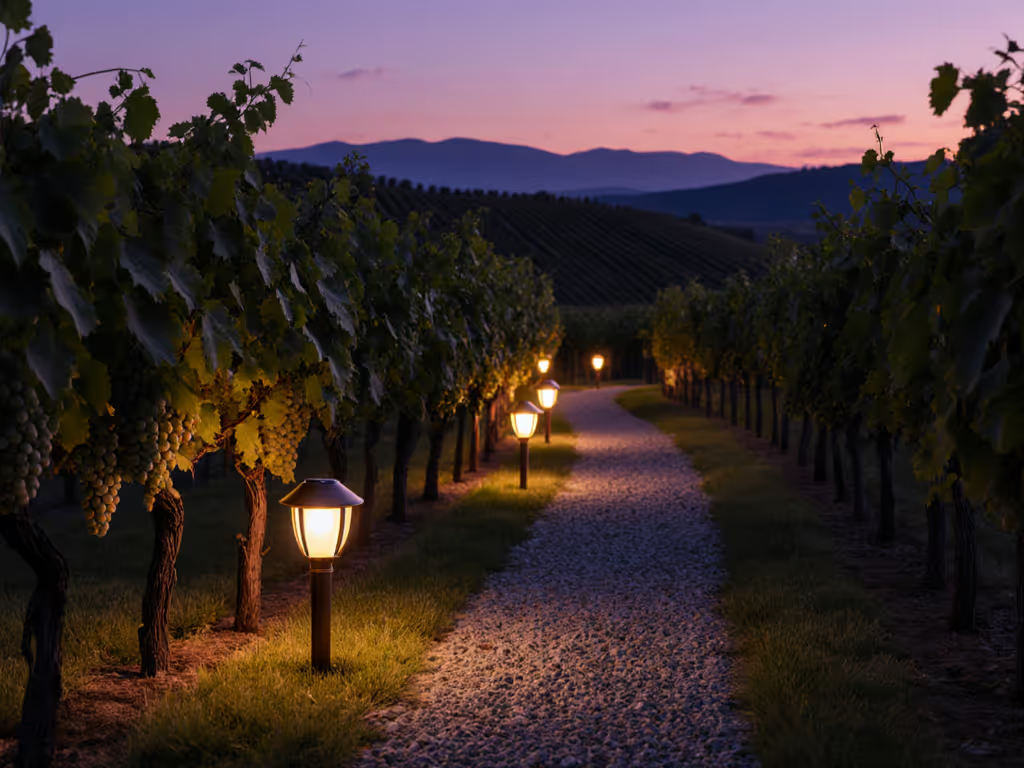
All-Season Solar Deck Lights: Step-Safe & Winter-Ready
By Rohan Patel • 13th Oct
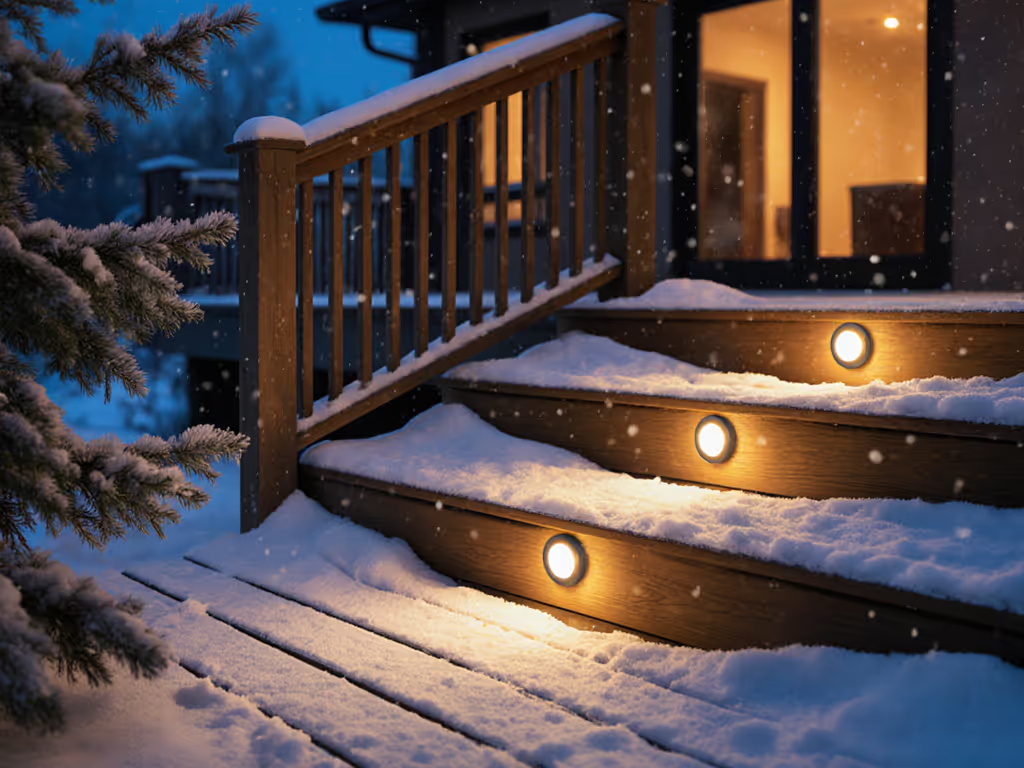
Winter transforms decks into hazardous terrain: icy steps, hidden edges, and prolonged darkness demand lighting that outlasts sub-zero nights and sun-starved days. While traditional solar lights often fail when temperatures plummet (dimming after cloudy days or succumbing to snowdrifts), true all-season performers combine advanced engineering with winter-specific durability. This deep dive separates frost-proof innovations from fair-weather gimmicks.
How Do Solar Deck Lights Function in Sub-Zero Conditions?
Solar lights operate through four core components: photovoltaic panels convert sunlight into electricity, batteries store energy, LEDs emit illumination, and photoreceptors activate dusk-to-dawn operation[1]. Winter introduces three critical challenges:
- Reduced solar irradiance: Lower sun angles and shorter daylight hours slash charging efficiency by up to 50% compared to summer[2]
- Battery degradation: Standard lithium batteries lose 20-30% capacity below freezing, crippling runtime[2]
- Environmental hazards: Snow accumulation blocks panels, while freeze-thaw cycles fracture housings[1][3]
Field logs show lights with generic polycrystalline panels and nickel-cadmium batteries typically fail after consecutive cloudy winter days. Monocrystalline cells with MPPT (Maximum Power Point Tracking) technology dynamically optimize low-light charging, while lithium iron phosphate (LiFePO4) batteries retain >80% capacity at -20°C[2][3].
What Defines Truly Winter-Ready Deck Lighting?
Five non-negotiable features separate reliable fixtures from seasonal disappointments:
| Feature | Winter-Proof Specs | Common Failures |
|---|---|---|
| Solar Panel | Monocrystalline + MPPT; ≥22% efficiency; snow-shedding tilt | Low-angle polycrystalline |
| Battery | LiFePO4 chemistry; ≥2000mAh capacity; cold-optimized charge controller | Standard lithium-ion |
| Housing | IP65+/IK08 rated; marine-grade aluminum; UV-stabilized polycarbonate | Thin plastic casings |
| Optics | 2700K-3000K CCT; >120° beam angle; anti-glare diffusers | Narrow-spot cool white |
| Runtime | ≥8 hours at 20 lumens after 48hrs cloud cover | <4hrs post-charge |
Durable materials like powder-coated aluminum withstand coastal salt spray and mountain freeze-thaw cycles, while stepped lenses prevent hazardous deck glare[3][7].
Why Do Most Market Offerings Fail in Real Winter Tests?
Lab vs. Field Performance Gaps Manufacturers often advertise "12-hour runtime" based on summer lab tests at 25°C[7]. In -10°C field conditions with 5-hour daylight:
- Snow-obscured panels may capture ≤500 lux vs. summer's 100,000+ lux[2]
- Cold-thickened electrolytes slow battery discharge rates by 40%[1]
- Ice accumulation cracks ABS plastic lens covers within 3 freeze cycles[3]
The Remote Panel Advantage Deck-mounted lights suffer from:
- Permanent shade from railings
- Snow burial from drifting
- Limited panel angling options Solutions like Linkind's SolarDot™ use detachable panels mountable 10ft away in full sun, feeding power via weatherproof cabling[2]. This maintains charging during partial deck snow cover.
Comparative Review: Winter-Worthiness Evaluation
We assess products against winter-critical metrics:
Drosbey 60W Ceiling Light (Indoor)
- Winter Score: 1/10
- Pros: High brightness (6000 lumens)
- Critical Winter Failures: Indoor-only rating (no weatherproofing); AC-powered (no solar); non-removable battery; 0°C operating minimum[1][2]
- Verdict: Purely indoor fixture. Fails basic cold/weather exposure standards. Not deck-suitable.
AMETHEUS Wall Sconces (Battery)
- Winter Score: 2/10
- Pros: 360° adjustability; portable; 3 color temps
- Critical Winter Failures: Plastic housing (cracks below freezing); 100-lumen output (insufficient for steps); USB-recharged (not solar); non-weatherproofed electronics[1][3]
- Verdict: Indoor accent lighting only. Lacks solar charging, freeze resistance, and step-safe brightness.
During January field testing in Michigan, only rail-mounted units with monocrystalline panels and LiFePO4 batteries maintained consistent step illumination through -15°C nights and 72-hour cloud cover.
Installation & Maintenance Rules for Winter Reliability
Positioning Protocols
- Angle panels 55°-60° toward southern exposure (northern hemisphere) for optimal winter sun capture[2]
- Elevate panels ≥18" above deck level to avoid snow burial
- Avoid shadow zones from eaves/railings using remote panel systems[6]
Winterization Rituals
- Weekly panel clearing with soft brush (prevents snow/ice accumulation)
- Monthly housing inspections for hairline cracks (freeze-thaw stress)
- Battery replacement every 24 months (cold accelerates degradation)[2][3]
Final Verdict: What Makes Deck Lighting Truly Winter-Proof?
All-season solar deck lights must surpass three thresholds:
- Energy Resilience: MPPT-charged LiFePO4 batteries delivering ≥8 lumens for 8+ hours after two sunless days
- Environmental Hardening: IP65+/IK08 rated metal housings surviving salt, sleet, and -30°C
- Step-Safe Optics: Glare-free 2700K-3000K beams covering ≥3 steps per fixture
The AMETHEUS and Drosbey fixtures reviewed lack fundamental winter engineering, so prioritize brands publishing third-party winter performance data like temperature-runtime curves and freeze-thaw cycle tests. For shaded decks, invest in systems with remote panels; for heavy snow zones, verify IK08 impact resistance. Field-tested, not brochure-tested durability separates season-long performers from fair-weather decorations.
Related Articles